

An Almost-Total Eclipse
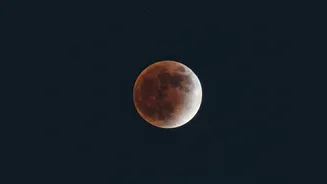
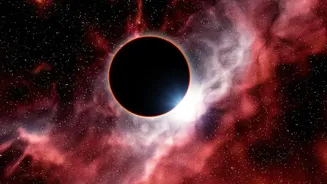
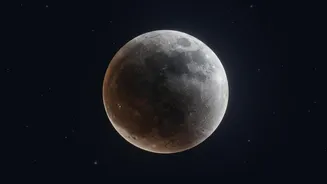
A lunar eclipse occurs when the Earth passes directly between the Sun and a full Moon, casting its shadow onto the lunar surface. What makes the event on August 28, 2026, so special is that it’s a 'deep' partial eclipse. More than 96% of the Moon's face will
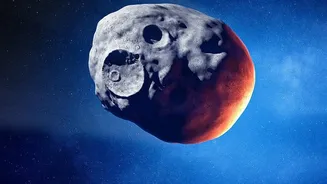
be covered by the darkest part of Earth’s shadow, known as the umbra. This is significant because it will appear remarkably similar to a total eclipse. For a brief period, the eclipsed portion of the Moon may even take on the famous reddish, coppery glow often associated with a 'Blood Moon', while a brilliant sliver of the lunar surface remains lit by the Sun.
Timings and Visibility in India
Here is the most critical piece of information for sky-gazers in India: the eclipse will not be physically visible from the subcontinent. The entire event unfolds during the daytime in India, when the Moon is below the horizon. The eclipse begins with its partial phase at 8:03 AM India Standard Time (IST) on Friday, August 28. The point of greatest eclipse occurs at 9:43 AM IST, and the partial phase concludes at 11:22 AM IST. Because the Moon will have set long before the eclipse begins, your only way to witness this stunning event is through a live online broadcast.
Your Virtual Front-Row Seat
Fortunately, we live in an age where you don't have to miss out. Several international organisations will provide a live feed of the eclipse, giving you a front-row seat from the comfort of your home. NASA is the primary source to watch for a high-quality broadcast. The space agency typically streams major celestial events on its official YouTube channel and its television broadcast service, NASA TV. Another excellent and reliable option is TimeandDate.com, which has already confirmed it plans to live stream the eclipse. These streams will feature views from telescopes located in regions where the eclipse is directly visible, such as North and South America, Europe, and Africa.
What to Look For in the Stream
As you tune in, you'll be watching a slow, majestic celestial dance. A lunar eclipse is not a fleeting moment but a process that unfolds over hours. First, you might notice a subtle darkening as the Moon enters Earth’s faint outer shadow, the penumbra. The real show begins when the Moon starts to enter the umbra, the dark inner shadow. This will look like a dark 'bite' being taken out of the lunar disk. As the eclipse approaches its maximum phase, watch for the colour change. Sunlight filtering through Earth's atmosphere gets scattered, and the red light is bent towards the Moon, which can paint the shadowed surface in hues of red and orange. Because this is a deep partial eclipse, you’ll see this effect alongside a sliver of the Moon that remains brilliantly white.
Prepare for a Morning Spectacle
To make the most of the experience, treat it like any other exciting event. Set a reminder for the morning of Friday, August 28, 2026. Prepare your screen—be it a laptop, tablet, or smart TV—and have the YouTube links for NASA and Time and Date ready. Since the maximum eclipse is around 9:43 AM IST, it could make for a fascinating mid-morning break. You can follow along with expert commentary that usually accompanies these live streams, explaining the science behind the spectacle as it happens. It's a perfect opportunity to feel connected to the cosmos and to a global community of viewers all watching the same magnificent event unfold in real-time.