




A Campus for Computation
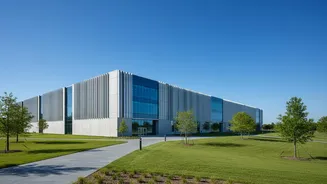
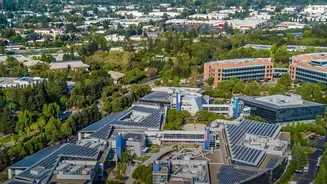
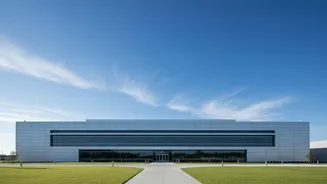
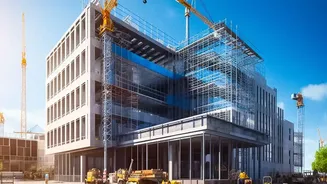
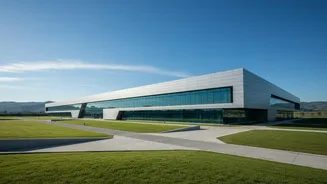
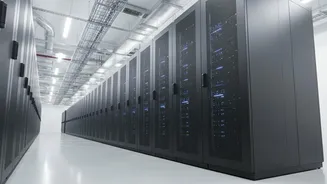
This isn't just one large building; it's a sprawling campus designed for a single purpose: powering artificial intelligence. Dubbed 'Project Camellia', the development in Effingham County, Georgia, will consist of multiple data centre buildings constructed
in phases. While local officials have cited investment figures around $20 billion, OpenAI sources suggest the final cost could exceed $30 billion, making it one of the largest private economic development projects in the state's history. This project marks a significant strategic shift for OpenAI. Instead of only leasing capacity from cloud providers like its primary partner, Microsoft, the company is now moving to build and control its own bespoke infrastructure. This self-designed campus will be tailored specifically for the intense demands of developing and deploying next-generation AI models.
The Insatiable Appetite of AI
So, why does a software company need a physical footprint larger than many small towns? The answer lies in the massive computational hunger of modern AI. Training large language models involves running tens of thousands of specialized graphics processing units (GPUs) non-stop for weeks or months. These GPU clusters operate like a single, gigantic machine, requiring immense power and generating a tremendous amount of heat. As models become more powerful, the hardware demands skyrocket. The leap from one generation of AI to the next requires not just more chips, but denser configurations, faster networking, and more robust cooling systems, all of which demand more physical space and energy. This Georgia campus is being built not for the AI of today, but for the far more demanding models of tomorrow.
Power Grids and Water Plains
The most significant challenge for a project of this scale is securing enough power and water. OpenAI has signed a 25-year agreement with Georgia Power to supply up to 3.2 gigawatts of electricity, which is enough to power over two million homes. This single facility will consume a substantial portion of the utility's planned new energy generation. To manage the strain on the grid, OpenAI has agreed to a 'demand response' program, allowing the utility to reduce power to the campus during peak times. Water consumption is another major concern for data centres, which traditionally use vast quantities for cooling. However, OpenAI has stated that Project Camellia will use a 'closed-loop' water system, which recycles water internally to minimize its impact on local resources. Even so, environmental groups remain watchful, concerned about the strain on the regional ecosystem.
An Economic Game-Changer
For Effingham County, the project promises a massive economic transformation. OpenAI is expected to become the county's largest taxpayer, generating hundreds of millions in tax revenue even with a 15-year, 50% property tax abatement. This new revenue stream could potentially allow the county to eliminate homestead property taxes for its residents under a 'Project Zero' initiative. The project is expected to create thousands of construction jobs and up to 1,000 permanent on-site jobs once fully operational. In addition, OpenAI has pledged an $80 million community investment fund for local priorities like schools, healthcare, and public safety, and will provide credits for its coding tools to students across Georgia.
The New Industrial Revolution
Ultimately, Project Camellia is more than just a single data centre. It is a physical symbol of the new industrial era being driven by artificial intelligence. The race to build bigger and more powerful AI models has become a race to secure land, power, and capital on a scale previously unseen in the tech industry. Companies like OpenAI, Microsoft, Google, and Amazon are now engaging in utility-scale energy planning and industrial-grade construction. The ability to finance and build infrastructure on this colossal scale is becoming the primary barrier to entry for competing at the frontier of AI, consolidating power in the hands of a few major players who can afford to make these multi-billion-dollar bets on the future.