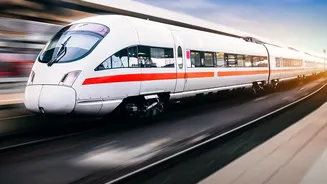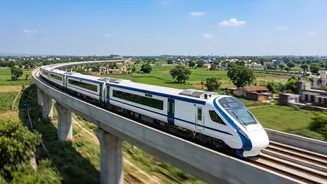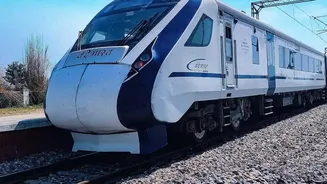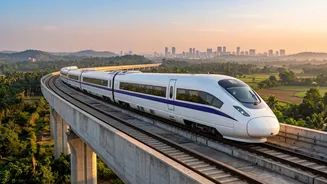


The Latest Milestone: Trials on the Horizon
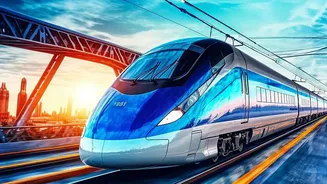
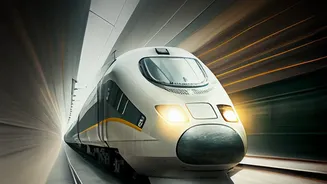
The most significant recent development for India's bullet train project is a clearer timeline for testing. According to Union Railway Minister Ashwini Vaishnaw, the first indigenously developed bullet train is expected to be on the tracks for testing by
May or June 2027. This follows the completion of the first body frame, which has been sent for crucial 'squeeze testing' to ensure its structural integrity under high-speed conditions. Following a trial period of two to four months, the train is anticipated to be ready for inauguration. These announcements signal that after years of groundwork, the project is entering a tangible and exciting new phase. Civil construction is also advancing, with the Vapi-Surat section expected to be completed by December 2026.
A Project Years in the Making
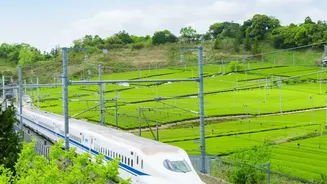
The Mumbai-Ahmedabad High-Speed Rail (MAHSR) Corridor is not a new dream. The foundation stone for this ambitious 508-kilometre project was laid back in September 2017. A collaboration between India and Japan, the project aims to implement Japan's renowned Shinkansen technology, known for its exceptional safety and punctuality. The corridor will connect the financial hubs of Mumbai and Ahmedabad, passing through 12 stations across Maharashtra, Gujarat, and Dadra and Nagar Haveli. The goal is to slash the travel time between the two cities from over seven hours by conventional rail to just under two hours, operating at speeds of up to 320 km/h.
Navigating Hurdles and Delays
A project of this magnitude is never without its challenges. The MAHSR corridor has faced significant hurdles that have impacted its timeline and cost. One of the primary obstacles was land acquisition, particularly in parts of Maharashtra, which led to considerable delays. The COVID-19 pandemic also slowed down progress, as did the general complexity of building such a sophisticated system, which includes elevated tracks and even an undersea tunnel. These delays have contributed to cost escalations, with some estimates suggesting the project cost has risen significantly from its initial projection of around ₹1.08 lakh crore. Despite these setbacks, land acquisition for the entire corridor was reportedly completed in early 2026, paving the way for construction to accelerate.
Phased Rollout and Future Vision
The bullet train will not launch along the entire 508-km route at once. The commissioning will happen in phases. The first stretch expected to become operational is the Surat-Bilimora section in Gujarat, with a target date of August 2027. The service will then be extended to other completed portions of the corridor, with the full Mumbai-Ahmedabad line opening once all sections, including the more complex parts in Maharashtra, are finished. Beyond this inaugural corridor, the MAHSR project is seen as a template for the future of high-speed rail in India. The experience and technology gained are expected to inform the development of several other proposed high-speed corridors, creating a network that could transform travel across the nation.
The National and Economic Impact
The bullet train is more than just a fast mode of transport; it represents a significant leap in India's infrastructure and technological capabilities. The project is a flagship of the 'Make in India' and 'Atmanirbhar Bharat' initiatives, with a growing emphasis on domestic manufacturing of components and even the trainsets themselves. Economically, the corridor is expected to boost commercial activity, tourism, and real estate development in the regions it connects. It is also a massive job creator. Furthermore, successfully implementing Shinkansen technology is a major step in modernising Indian Railways, promising not just speed but also a new benchmark in safety and reliability for passengers.