


A New Window on the Cosmos
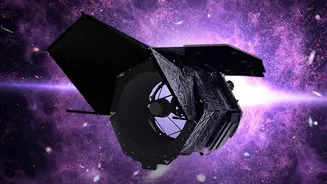
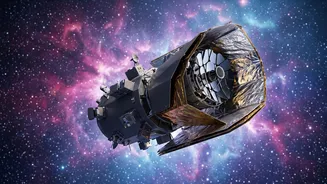
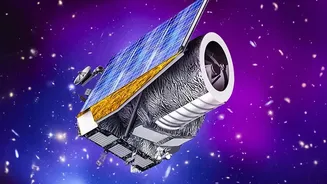
In late September 2026, NASA announced it was moving forward with a new space telescope designed to explore the history and evolution of the universe. Known as PRIMA (Probe far-Infrared Mission for Astrophysics), the observatory is the first in a new class
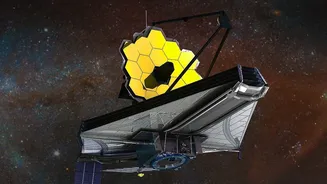
of missions called Probe Explorers. These are designed to bridge the gap between smaller projects and massive, multi-billion-dollar flagship observatories like the James Webb Space Telescope (JWST). Targeted for a 2033 launch, PRIMA will spend five years conducting deep surveys of the cosmos, aiming to answer fundamental questions about how our universe came to look the way it does today.
Seeing the Invisible Universe
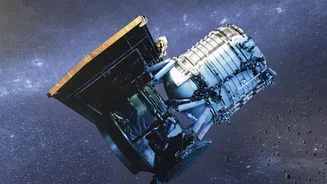
PRIMA will observe the universe in far-infrared light, a part of the spectrum that is invisible to the human eye. This light is emitted by cooler objects in space, such as clouds of cosmic dust, nascent stars, and distant galaxies. Crucially, far-infrared radiation can pass through the dense dust that normally obscures our view of these cosmic nurseries. This allows scientists to peer into the hearts of star-forming regions and galactic cores, places that are hidden from telescopes that see primarily in visible light. To achieve this, PRIMA's 1.8-meter (5.9-foot) telescope and its instruments will be cryogenically cooled to incredibly low temperatures, just a few degrees above absolute zero. This extreme cooling prevents the telescope's own heat from overwhelming the faint signals from deep space.
Unlocking Cosmic Secrets
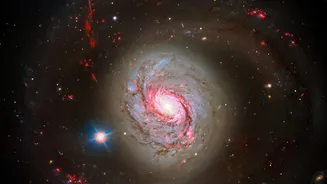
The scientific goals for PRIMA are vast and ambitious. The mission will investigate how planets form and the origins of their atmospheres, including the role water plays in the process. It will also trace the evolution of galaxies and their supermassive black holes over cosmic time. By studying the faint glow of interstellar dust, PRIMA will help us understand how heavy elements, crucial for life, have been built up and dispersed throughout the universe. In essence, the mission aims to unveil the obscured parts of the cosmos to better understand the formation of planets, stars, and galaxies. It will fill a critical observational gap between what JWST can see in the near- and mid-infrared and what radio telescopes like ALMA observe at longer wavelengths.
The Billion-Dollar Question
The headline feature of the PRIMA project is its cost cap: $1.2 billion, not including the launch. While that sounds like an immense sum, it is a deliberate and strategic part of NASA's plan. This price tag places PRIMA in the new "Probe-class" of missions, which are meant to deliver high-priority science without the decade-spanning timelines and ballooning budgets of flagship missions. For context, the James Webb Space Telescope's final cost to NASA was nearly $10 billion, while the Hubble Space Telescope program has cost even more over its lifetime. The $1.2 billion cap is designed to enable powerful new discoveries on a more predictable and sustainable cadence, allowing NASA to pursue a wider portfolio of ambitious projects. This approach represents a new model for big science: maximizing discovery while adhering to a firm budget.