



The Ghost of the Gated Shifter
There are few sounds in the automotive world as evocative as the metallic clack-clack of a chrome lever sliding through an open-gated Ferrari shifter. For generations, it was the sound of performance, the symbol of a driver in perfect command of their
machine. But for more than a decade, it has been a ghost. Ferrari, like most supercar makers, abandoned the traditional manual transmission in favor of dual-clutch transmissions (DCTs). The logic was undeniable: DCTs are faster, more efficient, and produce better lap times, leaving no room for a comparatively slow, three-pedal setup in the ruthless pursuit of performance. The last series-production manual Ferrari was a version of the California, which reportedly sold in minuscule numbers. Yet, as often happens, absence made the heart grow fonder. Manual-equipped classic Ferraris began soaring in value, a market signal that enthusiasts craved the analogue involvement that modern technology had engineered away. This left Ferrari with a classic business problem: how to serve a passionate, nostalgic demand without compromising the cutting-edge performance that defines the brand.
Enter the By-Wire Solution
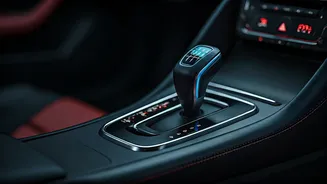
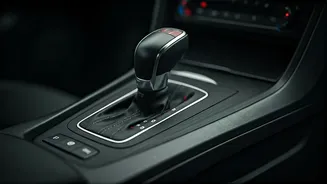
The answer, it seems, is not to go backward, but to use technology to simulate the past. Recent patent filings reveal Ferrari's work on what it calls a 'Manuale By-Wire' system. In simple terms, 'by-wire' technology replaces physical, mechanical linkages with electronic ones. Your drive-by-wire accelerator pedal doesn't have a cable connected to the engine; it has a sensor that tells a computer how much to open the throttle. Ferrari's patent applies this logic to the gearshift. It describes a beautiful, classic-looking H-pattern gated shifter that sits in the center console. However, it is not mechanically connected to the transmission at all. Instead, moving the lever through the gates triggers sensors that send an electronic signal to the car's existing eight-speed dual-clutch gearbox, telling it which gear to select.
The Best of Both Worlds?
The promise of this system is to offer the ultimate compromise. On one hand, you get the tactile, emotional experience of moving a physical lever through a metal gate—an action enthusiasts have sorely missed. On the other, you retain the blistering speed of the DCT. To make the illusion convincing, the patent details a system of haptic actuators, springs, and rollers designed to create mechanical resistance and a satisfying 'click' as the lever slots into gear, mimicking the feel of a real manual. This was recently confirmed with the announcement of the limited-edition 12Cilindri Manuale, which uses this exact system. This model features a clutch pedal that is also by-wire, meaning it sends an electronic signal rather than operating a hydraulic link. The software is even tuned to allow for a jerky start or a stall if the clutch is released too quickly, adding to the realism. Crucially, it eliminates the dreaded 'money shift'—accidentally shifting into a gear that over-revs and destroys the engine—as the computer can simply block the selection.
A Purist-Friendly Future or a Clever Fake?
This raises the multi-million-rupee question: is a simulated manual good enough for the purists it aims to please? Skeptics will argue that no amount of haptic feedback can replace the genuine mechanical connection to the drivetrain. The feeling of a clutch biting, the subtle vibrations through the lever, the direct link between human and machine—these are sensations that an electronic system, no matter how clever, can only imitate. For many, the lack of a true mechanical connection makes the shifter a high-tech novelty rather than a return to form. However, another school of thought sees this as a brilliant and pragmatic solution. Ferrari recognizes that customers want the feeling of a manual, but not the performance penalties that come with it. Developing an entirely new mechanical gearbox for a limited-run model would be prohibitively expensive and result in a slower car. This by-wire system cleverly preserves the ritual and romance of shifting while retaining the full performance of the underlying modern hardware. You can have the joy of rowing through the gears on a weekend drive, and then switch the car to full automatic mode for the drive home.