

Meet the Skyfall Mission
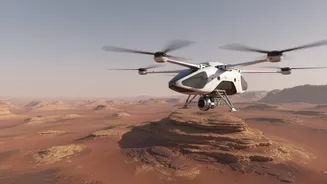
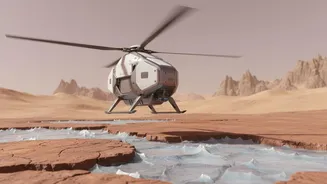
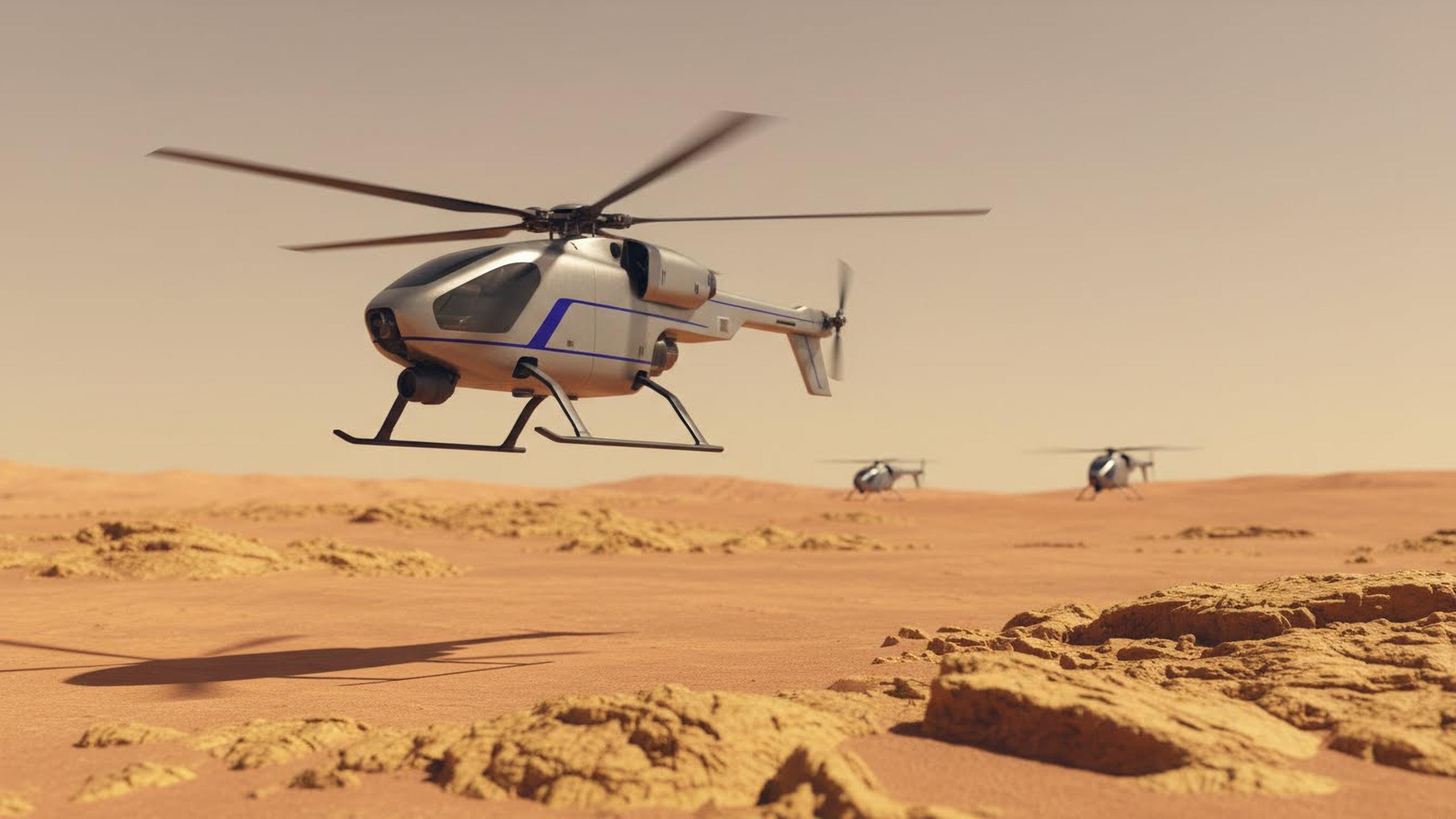
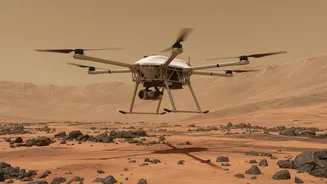
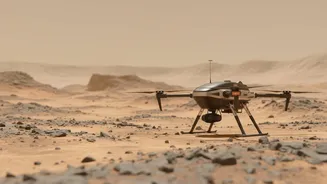
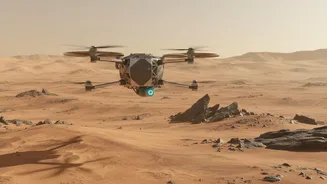
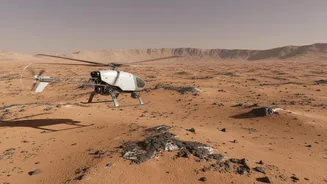
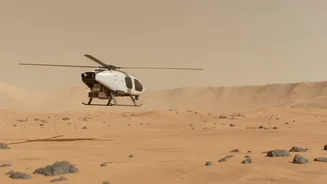
Imagine a spacecraft approaching Mars, but instead of deploying a single, complex lander, it releases a team of three autonomous helicopters that fly themselves to the surface. This is the core idea behind Skyfall, a mission concept developed by NASA's
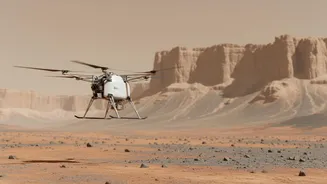
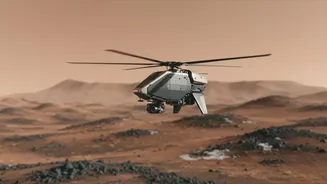
Jet Propulsion Laboratory (JPL) and AeroVironment. Announced in early 2026, Skyfall represents a dramatic leap forward from the history-making Ingenuity helicopter. Unlike Ingenuity, which was a 1.8 kg technology demonstrator that hitched a ride on the Perseverance rover, the Skyfall helicopters are designed as a primary science mission. They would operate independently, communicating directly with orbiters and covering far more ground than any rover could. This innovative mid-air deployment strategy is designed to significantly reduce landing costs and complexity, paving the way for more frequent and targeted exploration.
From Tech Demo to Scientific Workhorse
The Ingenuity helicopter's 72 flights were a resounding success, proving that powered, controlled flight in Mars's incredibly thin atmosphere was possible. It acted as an aerial scout, helping the Perseverance rover navigate tricky terrain. Skyfall builds on that legacy but transforms the helicopter from a scout into a primary scientific explorer. Each of the three helicopters will be equipped with a suite of sophisticated instruments designed to conduct detailed surveys. The goal is no longer just to fly, but to perform complex science that can't be done from orbit or the ground, fundamentally changing how we search for resources and investigate the Red Planet's history.
The Search for Hidden Ice
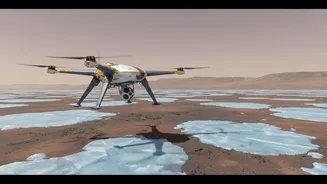
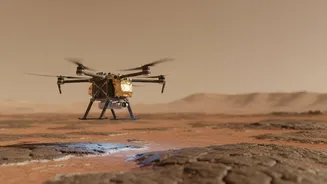
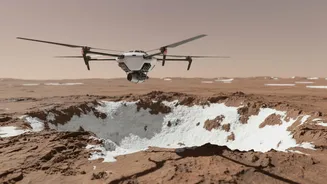
The key scientific instrument aboard the Skyfall helicopters is a lightweight, ground-penetrating radar (GPR). In artist concepts and test videos, this flexible antenna looks like a small cape trailing behind the craft. As the helicopter flies low and slow over the Martian surface, this radar will send signals into the ground to map what lies beneath. It's designed to detect the presence, depth, and extent of water ice buried within the top few feet of Martian soil, a zone that orbiting radar can't resolve. This ability to peer just below the surface is the mission's game-changing capability. The helicopters are expected to fly for about two and a half minutes at a time, covering up to two kilometers in a single sortie.
Why Finding Water Ice Is Crucial
Finding accessible water ice is arguably the single most important step toward establishing a long-term human presence on Mars. Hauling water from Earth is prohibitively expensive, so future astronauts will need to live off the land through a process called in-situ resource utilization (ISRU). Buried water ice can be mined and then broken down into its constituent parts: hydrogen for rocket fuel and oxygen for breathing. This makes potential ice deposits a critical resource for making missions cheaper, safer, and more sustainable. Beyond its utility for astronauts, subsurface ice is a prime target for science. It holds a frozen record of Mars's past climate and could potentially preserve signs of ancient microbial life, protected from the harsh surface radiation.
More Than Just a Radar
While the ground-penetrating radar is the headline instrument, the Skyfall helicopters will be multi-talented. They are also slated to carry 13-megapixel color cameras to create highly detailed 3D terrain maps, helping to identify safe landing zones for future human missions. Additionally, near-infrared cameras will analyze the composition of surface dust and rocks, while atmospheric sensors will measure temperature and wind patterns. This combination of instruments will provide a comprehensive picture of the local environment, offering a level of detail that satellites in orbit cannot match and a range that rovers cannot achieve.
What's Next for Skyfall?
It's important to remember that Skyfall is currently a mission concept, not yet an officially funded NASA mission. However, it is a mature proposal with a potential launch target as early as 2028. The concept leverages the proven success of Ingenuity and is designed to be a relatively affordable and rapid way to advance Mars exploration. If selected, Skyfall would not only scout for resources but also help certify the safest and most resource-rich landing sites for the first astronauts to walk on Mars. By answering the critical question of where the water is, this trio of helicopters could lay the groundwork for humanity's next giant leap.