

A Crisis Unfolding in Real Time
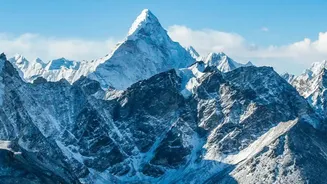
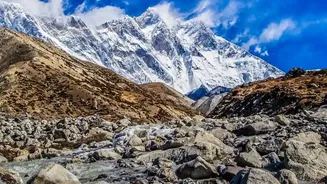
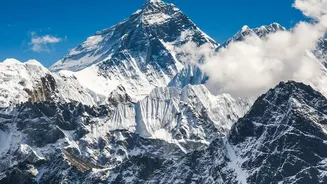
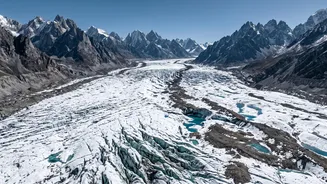
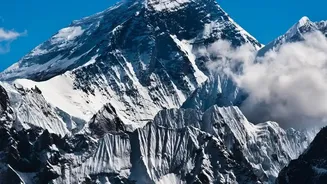
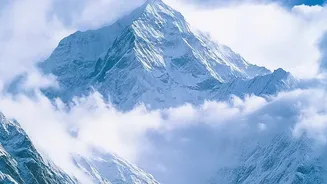
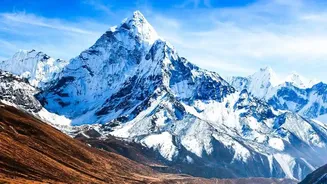
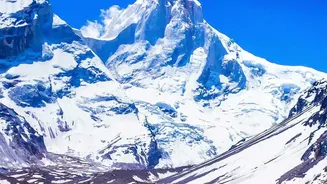
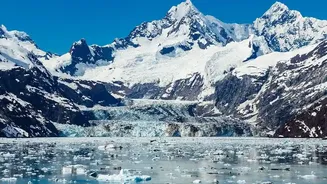
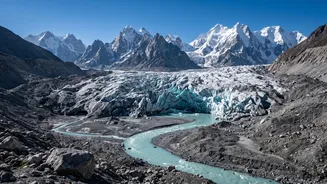
The Hindu Kush Himalaya region is warming at a rate faster than the global average, triggering profound changes in its frozen landscapes. Landmark 2026 reports from the International Centre for Integrated Mountain Development (ICIMOD) confirm that glaciers
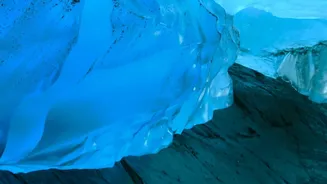
here are now melting at a startling pace. Ice loss has doubled since the year 2000, and the melt rate has accelerated by 65 percent since 2010 compared to the previous decade. This isn’t a distant problem; it is a crisis unfolding in real-time. Scientists warn that some parts of the Himalayan cryosphere may be approaching a tipping point towards irreversible retreat. For the nearly two billion people downstream who depend on the water from these glaciers, the consequences are immense.
The Terrifying Threat of GLOFs
One of the most immediate dangers stemming from melting glaciers is the formation of unstable glacial lakes. As glaciers shrink, they leave behind vast depressions that fill with meltwater, often dammed only by loose rock and debris known as moraine. These natural dams can be incredibly fragile. When they fail, they unleash what is known as a Glacial Lake Outburst Flood, or GLOF. A GLOF is not a gentle overflow; it is a sudden, violent release of millions of cubic metres of water, mud, and boulders that scours entire valleys. A recent ICIMOD assessment identified 47 glacial lakes in the river systems of Nepal and surrounding areas as being at high risk of such an outburst. Events like the 1985 Dig Tsho GLOF, which destroyed a nearly completed hydropower plant and numerous bridges, serve as a stark reminder of their destructive power.
More Than Just Floods: A Cascade of Hazards
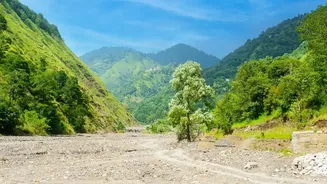
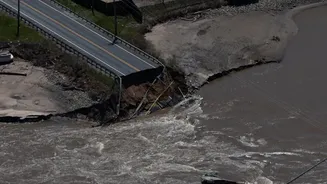
The danger is not limited to GLOFs. As global temperatures rise, the permafrost—the permanently frozen ground that acts like cement for high-altitude slopes—begins to thaw. This weakens entire mountainsides, making them susceptible to collapse. Recent disasters have highlighted this complex, cascading threat, where a massive rock and ice avalanche can trigger a flood without a traditional GLOF event. This is what happened in a catastrophic August 2026 event in Nepal, where the collapse of a glacier-laden slope registered as a magnitude 5.2 seismic event, sending a wall of debris and water down the Trishuli River valley with almost no warning. The water level rose by as much as nine metres in 30 minutes, highlighting a new and terrifyingly unpredictable type of hazard.
What the Latest Research Tells Us
Recent scientific findings paint a worrying picture. Studies show that landslide activity at elevations above 3,000 metres has increased significantly in recent decades, driven by a combination of retreating glaciers and thawing permafrost. As glaciers pull back, they no longer provide physical support to steep valley walls, leaving them exposed and unstable. While monitoring has improved, significant blind spots remain. Scientists have called for a major expansion of glacier monitoring and better cross-border data sharing, as a hazard originating in one country can have devastating impacts downstream in another. The challenge is immense, as many high-risk glaciers are in remote and difficult-to-access terrain.
The Human Cost and a Race Against Time
For the communities living in Nepal’s mountain valleys, these scientific findings are a matter of life and death. The increasing frequency of floods and landslides threatens homes, farms, and vital infrastructure like roads and hydropower plants. The 2026 flood event resulted in over a thousand deaths and thousands more missing, demonstrating the extreme vulnerability of downstream populations. In response, there is a growing push for better early warning systems. However, recent events have shown that existing systems, often designed for monsoon floods, are not always capable of detecting rapid-onset disasters like ice avalanches. Efforts are underway to model GLOF scenarios and implement risk-reduction measures, including manually lowering the water levels in the most dangerous lakes, but it is a difficult and dangerous race against time.