







Beyond the Algorithm: The New Frontier
When we talk about careers in Artificial Intelligence, the conversation often defaults to Machine Learning Engineers and Data Scientists who write the code and build the models. While these roles remain critical, they are only one side of the coin. Every
large language model, every generative AI application, and every smart system runs on a massive, power-hungry physical infrastructure. This backbone—comprising specialised data centres, custom hardware, and high-speed networks—is where a new wave of engineering opportunities is quietly surging in India.
The AI Data Centre Boom
The heart of the AI revolution is the data centre, but these are not your standard IT facilities. AI-ready data centres are colossal projects requiring immense power and advanced cooling solutions to handle the heat generated by thousands of specialised processors working in unison. This has created a significant demand for core engineering disciplines. Roles for mechanical engineers in designing innovative cooling systems, electrical engineers in managing high-density power grids, and civil engineers in constructing these massive facilities are growing. Job listings now frequently call for Data Centre Project Managers, Critical Facility Engineers, and Operations specialists who ensure the physical plant of AI runs 24/7 without failure. With India projected to significantly expand its data centre capacity by 2030, these infrastructure-focused roles are set to become a major source of employment.
The Race for Custom Hardware
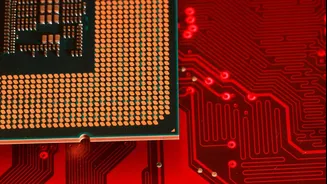
The second major pillar of AI infrastructure is hardware itself. Standard CPUs are no longer sufficient for the complex calculations required by modern AI. This has led to a boom in specialised chips like GPUs (Graphics Processing Units), TPUs (Tensor Processing Units), and other custom AI accelerators. For India, this trend aligns perfectly with its national ambition to become a semiconductor hub. As a result, there is a growing talent crunch for engineers who understand the intersection of hardware and AI. Companies are actively hiring for roles like Semiconductor Design Engineer, VLSI Engineer, Chip Verification Engineer, and AI Hardware Engineer. These roles require a deep understanding of physics, electronics, and computer architecture, making them a prime destination for graduates from electronics, electrical, and other core engineering branches.
Systems, Networks, and Reliability
Connecting all this hardware and making it work as a cohesive system is another critical domain. AI infrastructure jobs like Site Reliability Engineer (SRE), Platform Engineer, and Network Architect are becoming indispensable. These professionals are responsible for the stability, scalability, and efficiency of the entire AI stack. They build the platforms that allow ML engineers to train and deploy models seamlessly. Companies like Sarvam AI and others are building full-stack AI infrastructure in India and hiring for roles like Infrastructure SRE, Performance Engineer, and Platform Engineer. This shows that expertise in distributed systems, cloud computing, and high-performance networking is just as crucial as model-building itself.
What This Means for Indian Engineers
The message for engineering students and professionals in India is clear: the AI revolution is not just for computer science graduates. The convergence of hardware, software, and AI means that the boundaries between engineering disciplines are blurring. An electronics engineer with an understanding of AI systems, or a mechanical engineer who can design cooling for a GPU cluster, is becoming an incredibly valuable asset. The future may belong less to pure software or hardware specialists and more to hybrid engineers who can solve problems across the entire technology stack. This shift validates the rigour of core engineering education and opens a wealth of career paths that were previously less visible.