



Scientific breakthroughs sometimes arise not from careful planning, but from sheer accident. In a Stanford University lab, a simple mishap involving two coral fragments in a tank has unveiled a remarkable, previously unseen survival mechanism.
A Serendipitous Slip
It all started
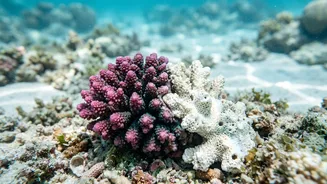
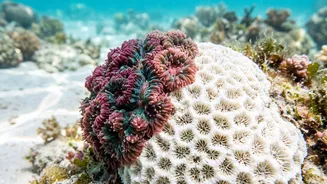
in 2025 when Professor Steve Palumbi, a marine biologist, noticed something unusual in one of his lab's tanks. Two small coral fragments, one healthy and colourful, the other pale and bleached from stress, had tipped over and were now touching. Bleaching is a serious stress response where corals expel the vital, colourful algae living in their tissues, leaving them bone-white and starving. It’s often a death sentence. But where these two pieces made contact, Palumbi saw a surprising sight: colour was creeping back into the bleached fragment, a sign that the life-giving algae were returning.
From Accident to Experiment
This accidental observation sparked an idea for Danny Collins, a PhD student in the same lab. He was already studying how corals transmit bacteria through physical contact. The question was immediate: if harmful things could be transferred through touch, could helpful things be transferred, too? To find out, Collins designed a controlled experiment. He took genetically identical pieces from the same coral colony, bleaching some by exposing them to high water temperatures until they lost their colour. He then paired each bleached fragment with a healthy one. Five pairs were placed in direct physical contact, while another five were set just millimetres apart, close but not touching.
The Astonishing Results
The outcome was stunning and unequivocal. Every single one of the five bleached fragments that were touching a healthy neighbour made a full recovery. Within days, colour began to return, and within seven weeks, they were indistinguishable from their healthy counterparts—the fastest recovery from bleaching ever documented. Meanwhile, the bleached fragments that were kept separate, without physical contact, did not recover. They eventually died. The experiment proved that direct contact was the key. Researchers watched as the healthy coral seemed to 'rescue' its struggling, genetically identical twin.
How the Rescue Works
Using powerful microscopes, the researchers figured out how the transfer happened. When the genetically identical corals touched, their tissues fused together. This created a 'tissue bridge', forming microscopic channels between them. Through this connection, the healthy coral sent a flood of its beneficial algae and other vital nutrients over to the bleached fragment. The algae didn't just spread out; they began to multiply at a record pace, doubling their numbers every four days, a rate about ten times faster than what is typically seen in natural recovery. After just one week of contact, the bleached coral had received enough support to continue recovering on its own.
A Key Limitation and a New Hope
There is, however, a critical catch. This rescue mission only works between genetically identical corals. When the researchers tried pairing a bleached coral with a healthy one from a different colony, the result was 'tentacle warfare'. The corals recognized each other as foreign intruders and initiated an immune response, attacking each other rather than cooperating. This means scientists can't simply take any healthy coral and use it to heal a bleached one. The process is more like a successful organ transplant between identical twins than a universal cure. Despite this limitation, the discovery offers a profound new understanding of coral resilience.