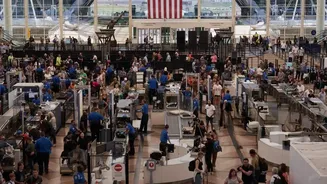





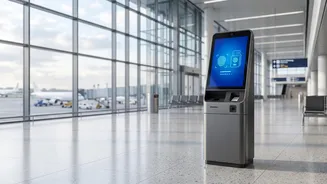


The moment the plane doors open, the urge is to dash for the exit. Yet, every passenger is guided through a carefully managed path. This isn't random; it's a highly regulated process of access control that ensures safety from plane to pavement.
Your Journey Through Invisible Zones
Once you
step off the aircraft, you are in what is known as the 'airside' or 'sterile' area of the airport. Think of this as a secure bubble that includes the runways, taxiways, and the boarding gates. You, having been screened before your flight, are considered 'sterile'. The primary goal of airport security is to prevent unscreened individuals or items from mixing with screened ones. Your path is carefully managed to guide you from this secure airside zone to the 'landside'—the public part of the airport that includes baggage claim, arrival halls, and ground transportation. This transition is a fundamental aspect of aviation security worldwide.
The Domestic vs. International Divide
The complexity of your path depends heavily on your point of origin. For domestic passengers arriving in India, the process is relatively straightforward. You disembark and are funnelled directly towards the baggage claim area and then into the public arrivals hall. You are essentially moving from one sterile part of the country to a non-sterile exit point. For international arrivals, the journey is more layered. Before you can collect your luggage, you must first clear immigration, which is the official point of entry into the country. Here, your travel documents are verified. Only after passing through this critical checkpoint do you proceed to baggage claim and then customs.
Clearing Customs: The Final Check
After collecting your luggage, international passengers face the final layer of control: customs. Here you must declare any goods you are bringing into the country. Most airports use a two-channel system. The 'Green Channel' is for passengers with nothing to declare, while the 'Red Channel' is for those carrying dutiable or restricted items. This process ensures that all goods entering the country comply with national regulations. Once you pass through customs, you officially exit the controlled area and enter the landside arrivals hall, where you can meet friends, family, and access public transport. This is the final step in transitioning from a secure to a public zone.
The Guardians of the Process
In India, the entire security framework is governed by the Bureau of Civil Aviation Security (BCAS), which sets the rules and standards. The on-ground enforcement and management of these access controls are primarily handled by the Central Industrial Security Force (CISF). CISF personnel manage passenger screening, surveillance, and control access throughout the airport, ensuring the integrity of the sterile areas. Their role is to ensure that the flow of passengers is maintained according to BCAS guidelines and that no unauthorized individuals breach the secure zones.
Why You Can't Simply Turn Back
Ever wondered why you can't just walk back towards the gates after reaching baggage claim? It’s because doing so would mean an unscreened person is re_entering the sterile airside area. Such a breach is a major security event. It would compromise the integrity of the entire secure zone, potentially forcing a lockdown and requiring all passengers within that zone to be re_screened, causing massive delays. Airport architecture and dedicated exit lanes are specifically designed to create a one_way flow, preventing passengers from moving from a non_sterile area back into a sterile one without going through security screening again. This strict separation is a core principle of modern aviation security.