

The Cookie Named for a Roof Tile
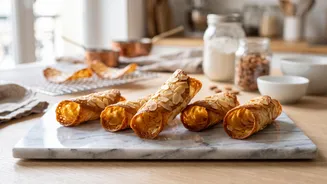
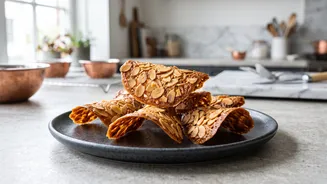
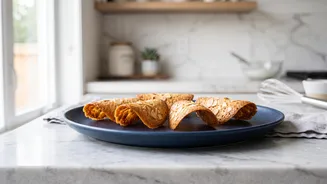
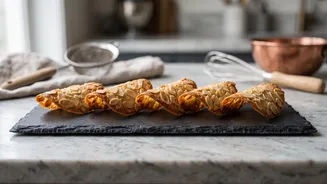
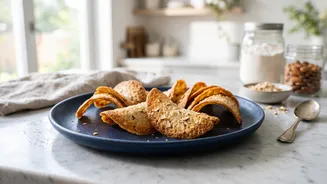
First, let's decode the name. 'Tuile' (pronounced 'tweel') is the French word for tile. The cookie gets its name from its signature curved shape, reminiscent of the terracotta roof tiles that adorn houses in Provence. Traditionally, these feather-light
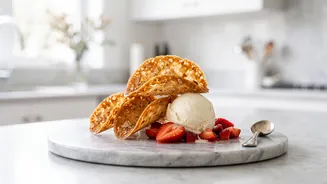
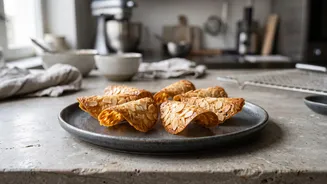
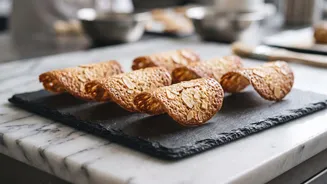
biscuits are draped over a rolling pin or bottle the moment they emerge from the oven, while still hot and pliable. This fleeting window is when the magic happens, as they cool and harden into their iconic arc in mere seconds. While they can be left flat, shaped into cones, or formed into edible cups for ice cream or mousse, the classic curve is what makes a tuile a tuile. It’s a simple, elegant garnish that elevates any dessert it accompanies.
The Soul of the Tuile: Its Deceptively Simple Batter
At the heart of this creation is a batter that is more akin to one for a cake than a typical cookie dough. The classic recipe is a testament to French culinary philosophy: a few simple ingredients, transformed by technique. It typically consists of just egg whites, sugar, flour, melted butter, and, of course, sliced almonds. Unlike many cookie recipes, there's no leavening agent like baking powder. The goal isn't to rise, but to spread. Each ingredient plays a crucial part. Egg whites provide structure without the richness of yolks, keeping the cookie light. Sugar adds sweetness and contributes to the crisp, caramelised finish. Melted butter offers richness and flavour, while a small amount of flour binds it all together. It's a delicate balance that results in a loose, spreadable consistency.
The Art of Spreading It Thin
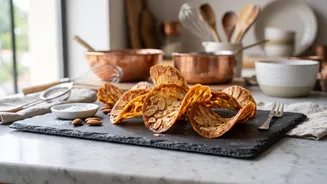
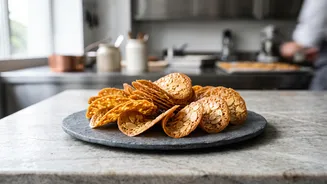
The defining characteristic of a tuile is its wafer-thin texture. Achieving this is a non-negotiable step that requires care. The batter is dropped by the spoonful onto a baking sheet and then, using the back of a spoon or an offset spatula, spread as thinly as possible—often to the point of being almost transparent. Many professional pastry chefs use stencils to achieve uniform shape and thickness, a trick that ensures each cookie bakes evenly. The almonds, usually sliced or flaked, are either mixed into the batter or sprinkled on top before baking. They not only provide the primary flavour but also create a beautiful, lace-like pattern as the batter spreads around them in the oven's heat. This process cannot be rushed; the thinness is directly responsible for the signature snap.
A Quick, Hot Bake and a Race Against Time
Tuiles bake in a hot oven for a very short period, often just a matter of minutes. The baker must watch them vigilantly, as they can go from perfectly golden-edged to burnt in a flash. The moment they are baked is when the real work begins. The cookies must be removed from the hot tray and shaped immediately. This is a race against the clock, as they become brittle as they cool. Many bakers work in small batches, baking only a few tuiles at a time to ensure they can shape each one before it sets. If a cookie hardens too quickly, a brief return to the oven can soften it enough to be pliable again. It's this hands-on, time-sensitive shaping process that truly defines the cookie as a work of craft.
Beyond the Classic Almond
While the almond tuile is the most traditional version, the batter is a versatile canvas for other flavours. Some variations infuse the batter with vanilla, cocoa powder, or citrus zest for a different aromatic profile. The almonds can be swapped for other nuts like pistachios, or the batter can be made savoury with the addition of cheese or herbs to serve as a crisp garnish for soups and appetisers. In modern restaurants, you might find tuiles in intricate, moulded shapes like leaves or branches, coloured with squid ink or vegetable powders. These contemporary takes showcase the endless adaptability of this simple, thin batter, proving that its potential is limited only by a chef's imagination.