
An Unplanned Lunar Collision
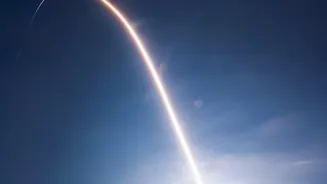
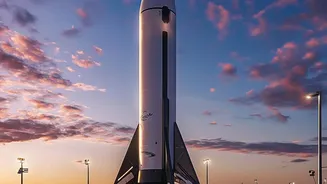
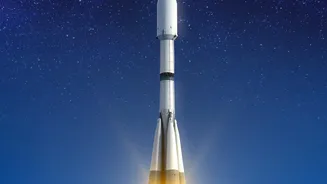
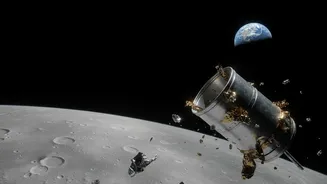
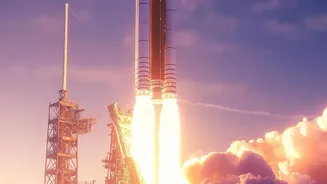
The object in question was a SpaceX Falcon 9 upper stage, left over from a January 2025 mission to deploy a lunar lander. After completing its primary task, the four-ton piece of space hardware was left in a chaotic orbit. For months, astronomers tracked
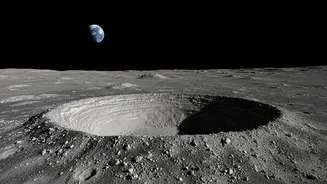
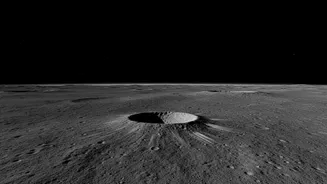
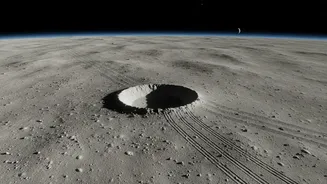
its trajectory, predicting its eventual collision with the Moon. The impact, though unwitnessed by any orbiting spacecraft, was confirmed by telescopes on Earth that detected the chemical signature of the resulting plume of dust and gas. While accidental impacts are still rare, this event wasn't the first of its kind; a Chinese rocket stage hit the Moon in 2022, for instance. These incidents highlight a significant gap in our ability to manage the lifecycle of hardware sent into deep space.
Welcome to Cislunar Space
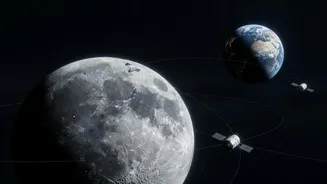
The region where this is all happening is called cislunar space. It's the vast area that extends from Earth's higher orbits out to just beyond the Moon. For decades, this was a relatively quiet domain, but it's quickly becoming a hub of activity. NASA's Artemis program, international missions, and a surge of private companies are all targeting the Moon for science, resource utilization, and future human settlement. This influx of missions means more satellites, more spacecraft, and inevitably, more debris. Unlike the relatively well-monitored lanes of low-Earth orbit (LEO), cislunar space is a wilder, less predictable environment.
The Challenge of Looking So Far
Tracking a small, non-communicative object hundreds of thousands of kilometers away is incredibly difficult. The sheer volume of cislunar space is immense. Objects are faint, and the glare from the Earth and Moon can easily blind ground-based telescopes. Furthermore, the physics are more complex. In LEO, an object's orbit is primarily governed by Earth's gravity. In cislunar space, the gravitational pull of both the Earth and the Moon creates unstable, unpredictable trajectories, often referred to as the "three-body problem." This makes it hard to know exactly where a piece of debris will end up, as the recent Falcon 9 impact demonstrated.
Who Is Watching the Skies?
Currently, there is no single, coordinated air traffic control system for cislunar space. Space Situational Awareness (SSA), the practice of tracking objects in space, has historically focused on the area closer to Earth. The U.S. Space Force and other international bodies run sophisticated networks for LEO, but their capabilities diminish significantly at lunar distances. This is starting to change. Recognizing the strategic and commercial importance of the region, entities like the U.S. Space Force are developing new programs, such as the Oracle-M pathfinder satellite, specifically to improve cislunar SSA. Private companies are also entering the field, viewing space traffic management as a growing market.
The Future of Lunar Traffic Control
As lunar activity ramps up, establishing a robust monitoring system is becoming urgent. Experts argue that we need internationally accepted rules for debris mitigation and disposal before the problem gets out of hand. The solution will likely involve a network of ground-based and space-based sensors, using advanced optics and AI to track objects and predict collision risks. Initiatives like the Artemis Accords are a step in the right direction, promoting transparency and safe operations. Ultimately, the goal is to create a system that can manage the growing traffic, protecting valuable assets and ensuring the long-term sustainability of human activity on and around the Moon.