









The Race Against Time
When a person goes missing, every minute counts. Traditional investigation methods, while foundational, are often a race against the clock, relying on witness accounts, manual review of CCTV footage, and on-the-ground searches. According to the National
Crime Records Bureau, hundreds of thousands of people remain untraced across the country. Police forces, often stretched thin, face the immense challenge of sifting through mountains of data. An investigator might need to scan countless hours of video from multiple locations, a process that is both time-consuming and prone to human error. This is where the sheer processing power of artificial intelligence begins to change the equation.
How AI Is Changing the Search
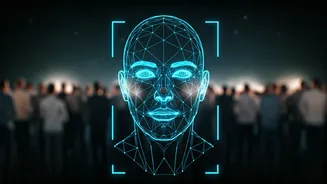
Artificial intelligence offers a suite of tools that can dramatically enhance the speed and scope of a search. The most prominent of these is facial recognition. Systems can scan vast databases of images—from CCTV networks at railway stations and airports to photos from orphanages and shelters—in seconds, looking for a match. In a trial in New Delhi, police used facial recognition to scan 45,000 images of children in institutional homes, identifying nearly 3,000 missing children in just four days. Beyond facial recognition, AI algorithms can analyze digital footprints, such as a person's last known social media activity or location tags, to identify patterns and potential leads. By processing disparate datasets—geolocation data, phone records, and public information—AI can suggest high-probability search areas, allowing investigators to focus their resources more effectively.
Success Stories and New Hope
The application of AI is already yielding positive results and bringing hope to families. In one case, a 12-year-old boy with autism who went missing in Delhi was found after 40 days when an official at an orphanage uploaded his picture to an AI-powered portal called Khoji.in. The system’s algorithm found a match with the photo his family had uploaded, leading to their reunion. In another innovative approach, the Rajasthan Police collaborated with an AI artist to use generative AI for age progression. By recreating what a child who went missing years ago might look like today, they can produce updated images for public circulation, significantly amplifying search efforts. These examples showcase AI's ability to connect dots that would be nearly impossible for humans to connect manually, sometimes even solving cases that have been cold for years.
The Ethical Tightrope
Despite its immense potential, the use of AI in policing is not without serious ethical concerns. The deployment of mass surveillance technologies raises fundamental questions about privacy. Facial recognition systems, in particular, have been criticized for potential inaccuracies and algorithmic bias, which could lead to the misidentification of individuals, especially from marginalized communities. Critics argue that without robust legal frameworks and transparent oversight, these powerful tools could be misused, reinforcing existing societal biases or leading to a state of pervasive monitoring. There is a pressing need to establish clear guidelines that govern how this data is collected, used, and stored, ensuring that the pursuit of public safety does not come at the cost of individual liberties and civil rights.
The Road Ahead for AI in India
For artificial intelligence to be effectively integrated into India's law enforcement framework, several challenges must be addressed. These include upgrading technological infrastructure, standardizing data protocols across different states and agencies, and providing comprehensive training for police personnel. The IndiaAI Mission, a national program aimed at building the country's AI ecosystem, could play a crucial role in supporting these efforts. Public-private partnerships are also emerging as a key strategy, with startups and NGOs developing specialized AI platforms and collaborating with police departments. Initiatives like Milaap Setu, an AI platform designed to find missing elderly individuals, demonstrate the power of technology built with empathy at its core. Ultimately, the success of AI in this field will depend on a human-centered strategy that prioritizes public trust and accountability.