





What Exactly Is EOS-05?
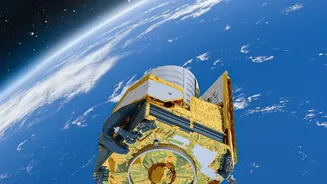
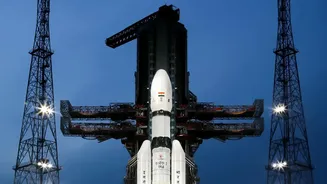
Think of EOS-05 as India’s most sophisticated camera in a very, very high place. Officially an Earth Observation Satellite, it’s designed to do one thing exceptionally well: watch over the Indian subcontinent continuously. Launched aboard a GSLV-F17 rocket,
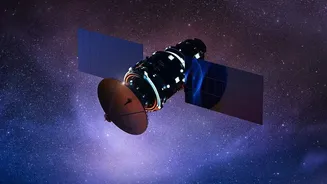
the 2,367 kg satellite is not just another satellite; it's India's first imaging satellite to be placed in a geosynchronous orbit, about 36,000 kilometres above the Earth’s surface. Unlike satellites in Low Earth Orbit (LEO) that zip around the planet and revisit a location only periodically, EOS-05 will stay locked over the same broad region. This gives it the unique ability to provide near-real-time imagery of a large area, a game-changer for many applications.
The Final Push into Orbit
The phrase “final orbit-raising manoeuvre” might sound like complex jargon, but the concept is quite intuitive. A rocket launch doesn't deliver a satellite directly to its final address. Instead, the GSLV rocket placed EOS-05 into an initial, lower 'transfer' orbit. From there, the satellite had to perform its own climb. It did this using its onboard engine, called the Liquid Apogee Motor (LAM), in a series of three precisely calculated engine firings, or 'burns'. The final manoeuvre on September 7th was the last of these burns, firing for over 20 minutes to push the satellite into its operational, near-circular path high above the Earth. ISRO’s announcement that the satellite is “healthy” confirms that this critical and delicate phase was completed without a hitch.
An All-Weather Eye for India
So, what can this powerful satellite actually do? Its primary mission is to provide rapid monitoring of the Indian landmass and oceans. Its advanced imaging systems can see across different wavelengths of light, allowing it to track a wide range of activities and phenomena. This capability is crucial for providing early warnings and real-time tracking of fast-developing natural disasters like cyclones, floods, and forest fires. It will observe weather patterns, monitor the health of crops and forests, and keep track of water levels in reservoirs. By providing a constant stream of data, EOS-05 will significantly enhance the country's ability to manage emergencies and natural resources effectively.
A Strategic National Asset
Beyond its civilian applications in disaster management and agriculture, EOS-05 is also a vital strategic asset. Officials have highlighted its role in bolstering national security. Its ability to provide continuous surveillance over regions of interest is a significant capability for monitoring borders and maritime activities. The satellite is expected to provide key imaging data for the Indian Navy, for instance. Having a sovereign, high-resolution eye permanently stationed in geosynchronous orbit enhances India's strategic autonomy and situational awareness, reducing reliance on data from other nations or from satellites that only offer intermittent coverage.
What Happens Next?
With the satellite now settled in its final orbital slot, the mission is not quite over. ISRO's engineers will now conduct a series of thorough health checks on all of the satellite's systems. This is like a final shakedown to ensure everything is working perfectly after the rigours of launch and the orbital manoeuvres. Once these checks are complete, the satellite's sophisticated imaging payloads will be switched on and calibrated. Soon, EOS-05 will begin sending back its first images, marking the official start of its operational life. This will kick off a new era for India's Earth observation capabilities, providing a wealth of data for years to come.