



Why Your Core Is Crucial
When you hear 'core', you might think of a six-pack, but it's much more than that. Your core is a complex system of muscles around your trunk and pelvis that acts like a natural corset for your spine. For those who sit all day, these muscles can become
inactive and weak. This forces other parts of your body, like your back and neck muscles, to overcompensate, leading to the classic 'desk slouch', aches, and stiffness. Strengthening your core helps maintain proper posture by keeping your spine in its natural alignment, which can reduce pain and improve stability in all your daily movements.
The Foundation: Standard Forearm Plank
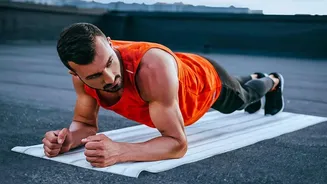
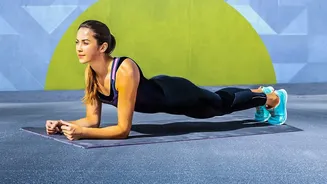
This is the classic move and the perfect place to start. It engages your entire core, including the deep transverse abdominis, which acts like a built-in back brace. How to do it: Lie on your stomach and place your forearms on the floor, with your elbows directly under your shoulders. Lift your hips so your body forms a straight line from your head to your heels. Engage your abs by pulling your belly button toward your spine and squeeze your glutes. Avoid letting your hips sag or rise too high. Look at the floor to keep your neck in a neutral position. Start by holding for 20-30 seconds and gradually increase the time as you get stronger.
The Stabiliser: Side Plank
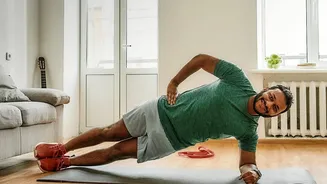
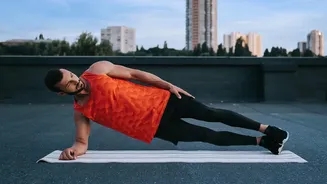
The side plank specifically targets your obliques, the muscles on the sides of your abdomen, which are crucial for rotational stability and protecting your spine. They also help sculpt your waistline. How to do it: Lie on your right side with your legs straight. Place your right elbow directly under your shoulder, with your forearm on the floor. Lift your hips until your body forms a straight line from your ankles to your head. Keep your core tight and avoid letting your hips drop. Hold for 20-30 seconds, then switch to the other side. For a modification, you can stagger your feet or bend your bottom knee for more support.
The Power-Up: High Plank with Shoulder Taps
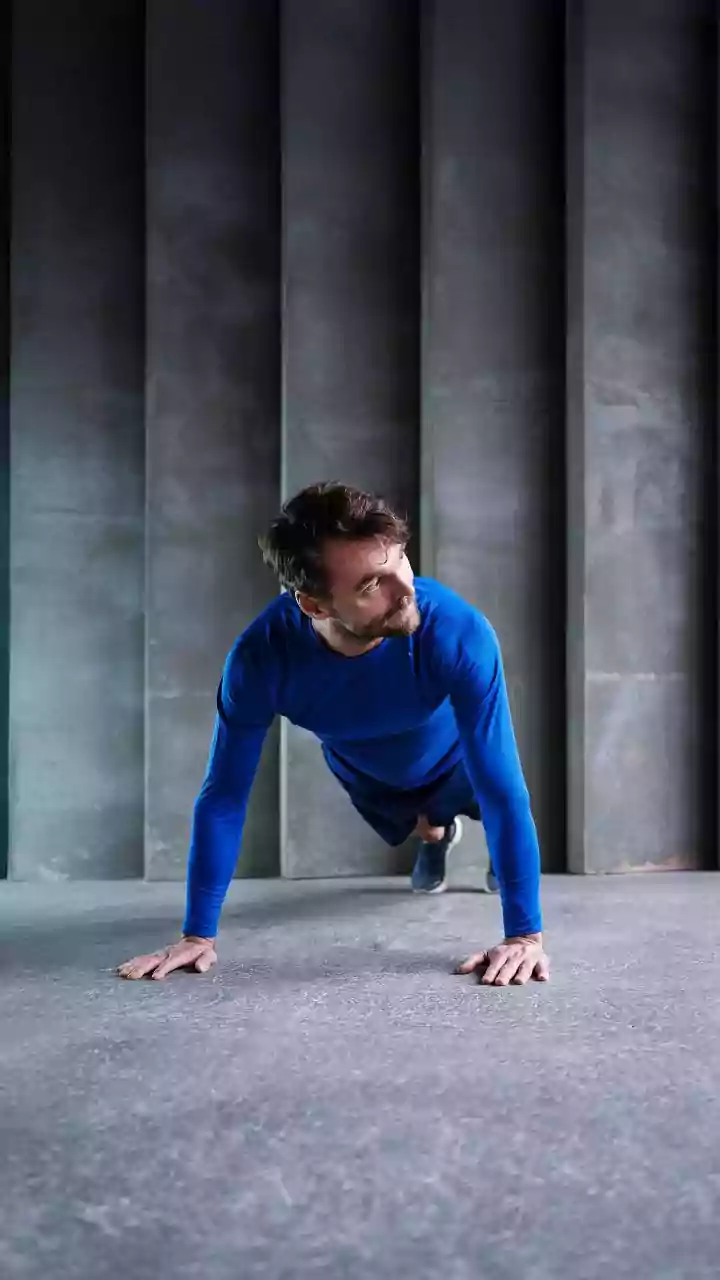
Adding movement challenges your stability and forces your core to work harder to prevent your torso from rotating. This variation is excellent for building anti-rotational strength. How to do it: Start in a high plank position, with your hands directly under your shoulders and your body in a straight line (like the top of a push-up). Keeping your hips as still as possible, lift your right hand and tap your left shoulder. Return your right hand to the floor and repeat on the other side, lifting your left hand to tap your right shoulder. Continue alternating for 30-45 seconds. The key is to move slowly and with control, minimising any rocking in your hips.
The Counter-Move: Reverse Plank
Sitting all day often leads to a hunched-forward posture. The reverse plank is a fantastic counter-exercise that strengthens your posterior chain—your glutes, hamstrings, and lower back—while also opening up your chest and shoulders. How to do it: Sit on the floor with your legs extended in front of you. Place your hands on the floor behind you, slightly wider than your shoulders, with your fingertips pointing toward your feet. Press into your hands and heels to lift your hips off the floor until your body forms a straight line from your shoulders to your heels. Squeeze your glutes and keep your core engaged. Hold for 20-30 seconds.