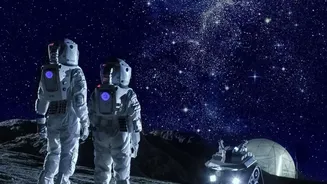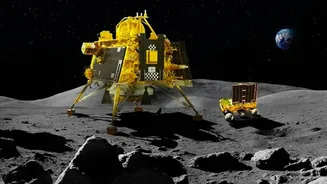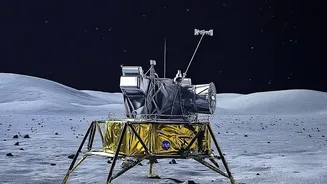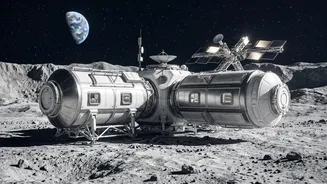

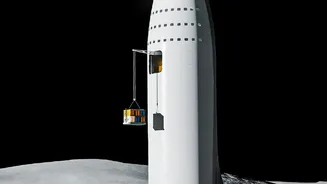
How do you build a home where there’s no air, extreme temperatures, and constant radiation? NASA is tackling this question for its future lunar base, and it's asking the next generation of scientists and engineers for the answers.
The Next Frontier: The Moon Base Challenge
As part of its Artemis
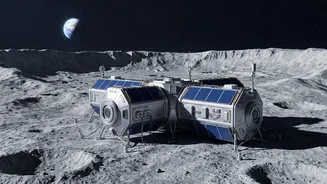
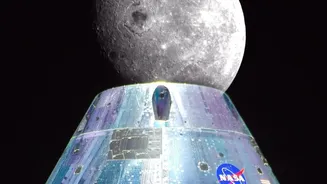
program, which aims to establish a long-term human presence on the Moon, NASA has launched the Moon Base Challenge. Announced in November 2026, this initiative invites high school and college students across the United States to design the technologies needed for a permanent settlement at the lunar South Pole. With $1 million in prize money, the competition isn't just an academic exercise; it's a call for tangible solutions to some of the biggest hurdles in space exploration. NASA is looking for fresh, creative ideas to make its vision of a sustainable lunar outpost a reality, seeing students as key partners in shaping humanity's future beyond Earth.
What 'Sustainable' Life on the Moon Means
Living sustainably on the Moon is profoundly different from on Earth. It means creating a self-sufficient ecosystem in one of the most hostile environments imaginable. The lunar surface has no atmosphere to breathe, experiences wild temperature swings from over 120°C to below -130°C, and is constantly bombarded with cosmic radiation. A key part of sustainability is 'in-situ resource utilization' (ISRU)—essentially, living off the land. This involves harnessing resources like water ice from shadowed craters for drinking water and oxygen, and using lunar soil, or regolith, for construction. Student teams are being asked to tackle these exact problems, turning science fiction concepts into practical engineering blueprints.
Six Pillars of a Lunar Society
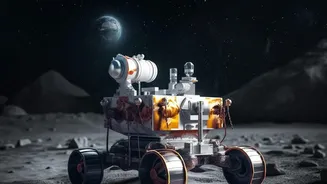
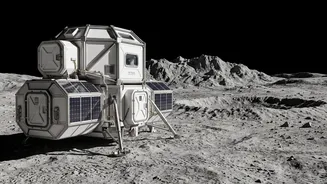
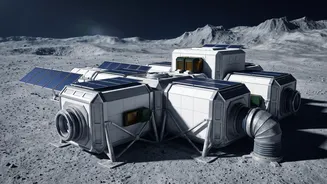
The challenge is broken down into six critical categories that form the foundation of a functioning moon base. The first is power generation and storage, crucial for surviving the long, dark lunar nights. Next is construction, which involves designing habitats and infrastructure that can be built using lunar materials. Life-support systems are needed to provide breathable air and clean water, while surface mobility concepts will help astronauts and cargo traverse the rugged terrain. Finally, robust communication networks are needed to connect the base with Earth, and astronaut safety systems must protect inhabitants from hazards like radiation and abrasive lunar dust.
More Than Just a Competition
While NASA will certainly benefit from the innovative concepts, the Moon Base Challenge is also a strategic investment in the future aerospace workforce. It provides students with invaluable handson experience, allowing them to work on realworld problems that mirror the tasks performed by NASA's own engineers. Participants will develop concept papers, conduct trade studies, and present their ideas to panels of experts, gaining skills that are directly transferable to a career in the space industry. The competition is intentionally open to students from all academic backgrounds, emphasizing that creativity and problemsolving are just as important as technical expertise. It's part of a broader push by NASA to engage students through various Artemis Student Challenges, ensuring that the generation that will inherit this new era of exploration is equipped to lead it.
From Bold Ideas to a Blueprint for the Future
The journey from a student's concept paper to an operational lunar habitat is long, but initiatives like the Moon Base Challenge are a critical first step. Teams must register by late January 2027, with initial submissions due in February. By involving students in the earliest stages of planning, NASA is not only crowdsourcing innovation but also fostering a sense of shared ownership in the mission to return to the Moon—this time, to stay. The competition taps into the bold, unconstrained thinking of young minds to help solve problems that have challenged scientists for decades, proving that you don't have to be a veteran astronaut to leave your mark on the cosmos.