

Gandhi, The 'One-Man Boundary Force' in Bengal
While Prime Minister Jawaharlal Nehru delivered his famous 'Tryst with Destiny' speech in New Delhi, Mahatma Gandhi was over a thousand kilometres away in Calcutta (now Kolkata). He had no interest in the celebrations. Heartbroken by the Partition of
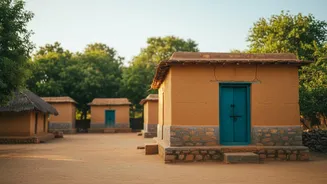
India, he spent the day fasting and praying for peace between Hindus and Muslims. The preceding months had seen horrific communal violence, particularly in Bengal. Gandhi chose to be in the riot-torn locality of Beliaghata, staying in a dilapidated building called Hyderi Manzil, to personally appeal for harmony. His presence was so effective in calming tensions that the last Viceroy, Lord Mountbatten, famously called him a 'one-man boundary force', noting that one man in Bengal was achieving more than tens of thousands of soldiers in Punjab.
An Independence Day Without a National Anthem
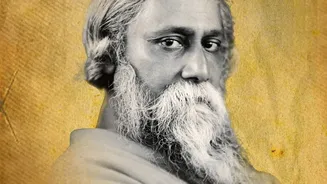
It may be hard to imagine an Independence Day celebration without the stirring notes of 'Jana Gana Mana', but on August 15, 1947, India did not have an official national anthem. Although Rabindranath Tagore had composed the song in 1911, it was only officially adopted by the Constituent Assembly on January 24, 1950. On the night of independence, the session of the Constituent Assembly concluded with a rendition of the song, but it was not yet the nation's formal anthem. The other contender, 'Vande Mataram', a powerful slogan during the freedom struggle, was also widely sung but faced debates over its status before ultimately being designated the national song.
A Date Chosen for a Different War
The choice of August 15 as India's Independence Day was not an outcome of the Indian freedom struggle but a decision made by Lord Mountbatten. The British government had originally planned to transfer power by June 1948. However, facing escalating tensions, Mountbatten advanced the date. When asked at a press conference, he chose August 15 on impulse. The date was personally significant to him: it marked the second anniversary of Japan's surrender to the Allied forces in World War II, a moment he had personally overseen as the Supreme Allied Commander of South East Asia Command. In effect, India's freedom was pegged to a milestone from a global conflict that had just ended.
The Tricolour and Its First Hoisting
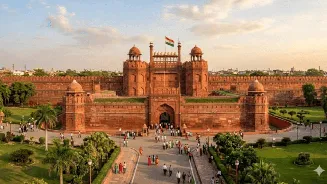
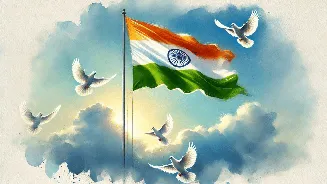
The Indian tricolour in its present form was adopted by the Constituent Assembly on July 22, 1947, just weeks before independence. The design was based on the 'Swaraj' flag originally conceptualised by Pingali Venkayya, which featured a spinning wheel (charkha) at its centre. This was replaced by the Ashoka Chakra. While we associate Independence Day with the Prime Minister hoisting the flag at the Red Fort, this tradition began later. On August 15, 1947, Nehru did raise the flag, but the first public hoisting ceremony took place in the afternoon at Princess Park near India Gate, not the Red Fort. The first flag hoisting at the Red Fort by Prime Minister Nehru actually occurred on August 16, 1947.
A Country Not Yet Whole
Freedom on August 15 did not mean a completely unified India. At the time of independence, there were over 560 princely states which were technically independent entities. These states were given the choice to join either India or Pakistan, or to remain independent. While most quickly acceded to India, thanks to the diplomatic efforts of Sardar Vallabhbhai Patel, some held out. Key states like Jammu and Kashmir, Hyderabad, and Junagadh had not integrated into the Indian union by August 15, 1947. The process of consolidating the nation's territory would continue for months and, in some cases, years, involving diplomacy and military action.