



A Telescope Made of Gravity
The idea hinges on a principle of Einstein’s theory of general relativity: gravity bends light. Just as a glass lens focuses light to a point, the immense gravity of the Sun can bend and magnify light from a distant object, like an exoplanet, that is directly
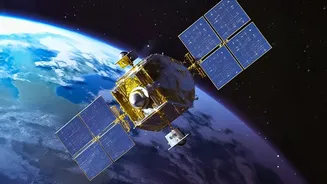
behind it. This effect is known as gravitational lensing. Scientists have proposed sending a spacecraft to a special spot in our solar system where this focused light converges. This location, known as the Solar Gravitational Lens (SGL) focal region, begins about 550 Astronomical Units (AU) from the Sun—that's more than 10 times the distance to Pluto.
The Promise: Imaging Alien Worlds
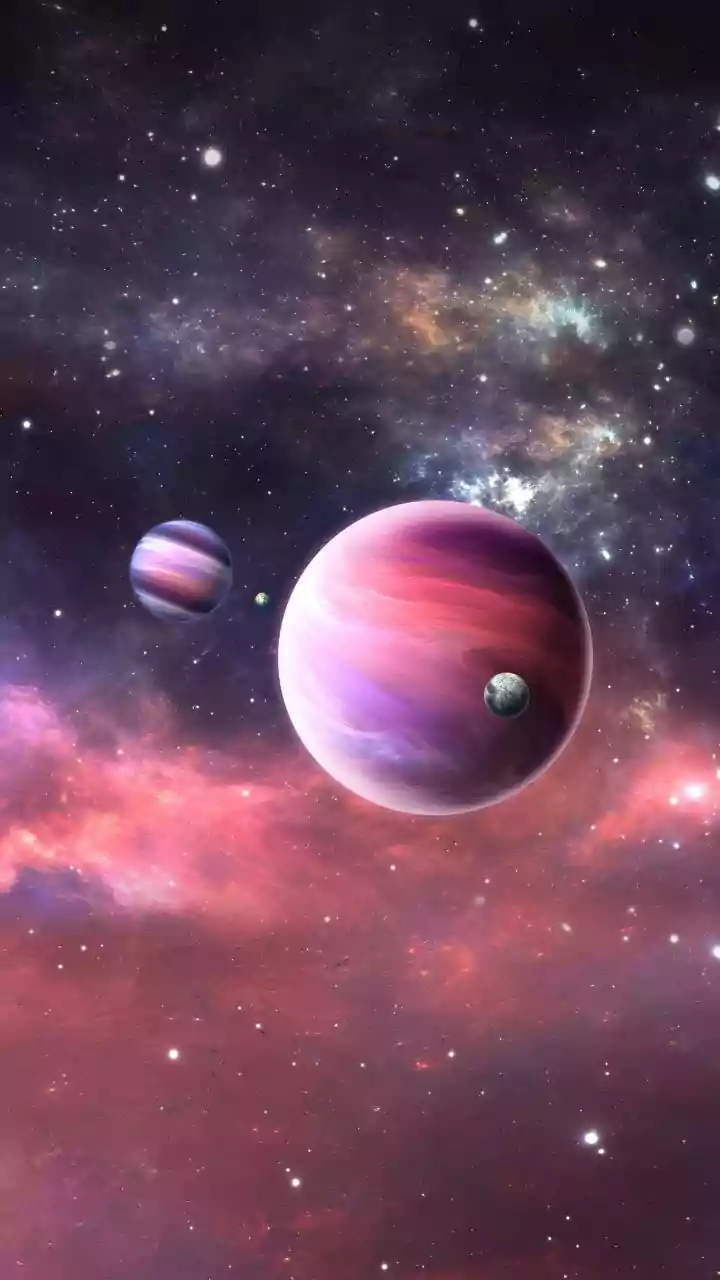
What makes this concept so revolutionary is the sheer power of the magnification. A conventional telescope would need to be impossibly large to get a detailed picture of an exoplanet. The SGL, however, could amplify the light from an exoplanet by a factor of up to 100 billion. A mission, such as one studied by NASA's Innovative Advanced Concepts (NIAC) program, could potentially capture multipixel images of an Earth-like planet dozens of light-years away. With enough observation time, scientists believe they could achieve a surface resolution of about 25 kilometres, detailed enough to distinguish continents, oceans, and maybe even signs of habitability.
New Questions About Our Sun
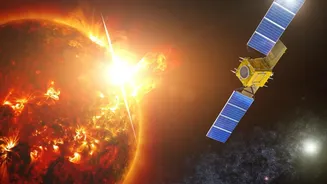
While the SGL offers incredible promise, it also forces us to confront challenges posed by the Sun itself. The Sun’s corona—its searingly hot, tenuous outer atmosphere—is a major source of noise and light that can interfere with the faint signal from an exoplanet. The focused light from the target planet would appear as a faint 'Einstein ring' around the Sun, and a mission would need to precisely block the Sun's direct glare while isolating this ring. Furthermore, the Sun isn't a perfect sphere; its shape and gravitational field have subtle variations that must be perfectly understood to use the lens effectively. Studying these distant influences of our own star is now a critical part of making the mission feasible.
The Immense Challenge Ahead
The primary obstacle is distance. Reaching the SGL focal region at 550 AU is a monumental task. For context, the Voyager 1 spacecraft, which has been travelling for nearly 50 years, is only about 160 AU from the Sun. To make the journey within a human lifetime, a probe would need advanced propulsion. Scientists are exploring concepts like solar sails that would perform a close flyby of the Sun to gain a massive speed boost, potentially reaching the destination in under 25 years. Another idea involves sending a swarm of smaller, self-assembling spacecraft to form the telescope once they arrive. These ambitious proposals highlight that the journey to this new frontier is as innovative as the destination itself.