






An Unexpected Shutdown
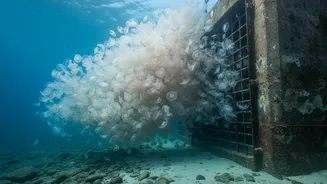
In mid-August 2026, operators at the Gravelines nuclear power station on the coast of northern France faced a gelatinous invasion. A huge bloom of jellyfish was sucked into the plant’s seawater intake channels, clogging the filter systems designed to protect
the cooling circuits. With the flow of essential cooling water restricted, the utility, EDF, had no choice but to take three of its six reactors offline and reduce power at a fourth as a safety precaution. While the company assured the public that there was no danger to the facility or the environment, the incident took a significant amount of power off the grid at a time when heatwaves were already straining Europe's energy supply. This isn't the first time it has happened at Gravelines, which has faced similar jellyfish-related disruptions in previous years, pointing to a recurring and growing problem.
Why Cooling Is Non-Negotiable
At its core, a nuclear power plant is a sophisticated engine for boiling water. Nuclear fission generates an immense amount of heat, which creates steam to drive turbines and produce electricity. That heat must be constantly and reliably removed. The plant’s cooling system is the critical component responsible for this task. It draws in vast quantities of water from a nearby source—like a river, lake, or the sea—to condense the steam back into water and to manage the temperature of the reactor itself. Even after a reactor is shut down, it continues to produce 'decay heat' and requires cooling. An interruption to this cooling water supply is one of the most serious issues a plant can face, as it can lead to overheating and, in a worst-case scenario, threaten the integrity of the reactor core.
A Vulnerable Lifeline
The water intake structure is a power plant’s lifeline to its cooling source, but it's also a point of significant vulnerability. These systems are susceptible to blockages from a wide range of sources, including storm debris, sediment, and aquatic plants. However, one of the most challenging threats comes from marine life. Events involving massive swarms of jellyfish, algae blooms, or large schools of fish have caused power reductions and shutdowns at coastal plants around the world. Scientists believe that changing climate patterns and warming ocean temperatures are contributing to the increasing frequency and size of these biological events, turning what was once a rare nuisance into a predictable operational hazard.
Engineering for Resilience
The concept of a 'protected' cooling intake is all about building layers of defence. Modern intake systems are not just simple pipes; they are complex, multi-stage filtration systems designed to handle a variety of threats. The first line of defence is often a coarse bar screen or barrier net to stop large debris. This is followed by finer screens, often in the form of large, rotating drums that can be automatically cleaned to remove smaller items like fish and jellyfish. Some advanced systems also incorporate bubble curtains that create a wall of air to deter marine life, or fish-return systems that safely guide animals away from the intake flow. The key is redundancy—having multiple, diverse systems in place so that if one is overwhelmed, others can take its place, ensuring the vital flow of water is never lost.
A Global Wake-Up Call
The incident at Gravelines serves as a powerful case study for energy grids everywhere, including India, which operates several critical nuclear power plants along its own extensive coastline. As sea temperatures rise and marine ecosystems shift, the likelihood of blockages from biological sources increases. Power plants designed decades ago may not have been engineered to handle the environmental conditions of today, let alone tomorrow. The shutdown in France is a clear signal that ensuring the resilience of energy infrastructure requires more than just maintaining the plant itself; it demands a proactive approach to protecting its lifelines from the increasingly unpredictable natural world. It proves that something as seemingly harmless as a jellyfish can pose a genuine challenge to national energy security.