




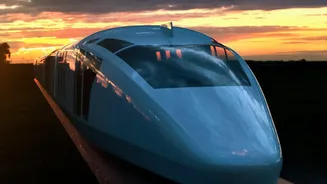
The Vision: What is the Bullet Train Project?
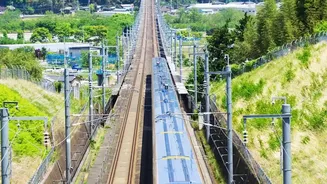
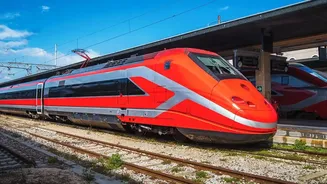
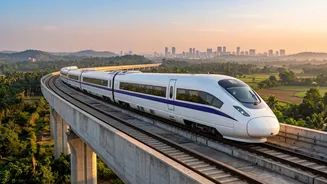
At its core, the project is a 508-kilometre high-speed rail line connecting two of India's major economic hubs: Mumbai, Maharashtra, and Ahmedabad, Gujarat. The corridor includes 12 stations, passing through both states and the Union Territory of Dadra
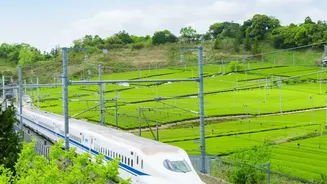
and Nagar Haveli. Designed for operating speeds of 320 km/h, the bullet train is expected to reduce travel time between the two cities from around eight hours to just about two hours for limited-stop services. The foundation for this ambitious project was laid in 2017, kicking off India's foray into high-speed rail and aiming to set a new standard for passenger comfort, safety, and reliability.
The Japan Connection and 'Make in India'
This massive infrastructure project is a collaboration with Japan, leveraging its world-renowned Shinkansen technology, known for an impeccable safety record. A significant portion of the initial estimated cost of ₹1.1 lakh crore is financed by a soft loan from the Japan International Cooperation Agency (JICA) at a minimal interest rate of 0.1% over a 50-year term. While the core technology is Japanese, there is a strong emphasis on the 'Make in India' initiative. Efforts are underway to manufacture trainsets domestically, with the first body frame of a high-speed train recently completed and sent for testing. This approach aims to reduce import dependency and build a local ecosystem for future high-speed rail projects.
Hurdles on the Track: Delays and Cost Escalation
The project has not been without significant challenges. From its inception, it faced hurdles related to land acquisition, particularly in Maharashtra, which caused considerable delays. These delays, combined with challenges in finalizing train set procurement and other logistical issues, have led to a substantial increase in the project's cost. The total cost has reportedly escalated to nearly ₹2 lakh crore from its original estimate. Such overruns are common in mega-projects, but they have fuelled debate about the project's financial viability and priorities.
Economic Engine or Expensive Dream?
Proponents view the bullet train as a powerful economic catalyst. The construction phase alone is a major boost to the cement and steel industries and is credited with creating over one lakh jobs. Once operational, it is expected to enhance economic integration between Mumbai, Surat, Vadodara, and Ahmedabad, facilitating business travel and boosting industries like tourism and real estate. However, critics question its economic viability, citing the high ticket costs and competition from low-cost airlines. There are also concerns about whether the massive investment could have been better used to upgrade India's existing, overburdened railway network.
Current Status: When Will the Train Run?
As of September 2026, the project is advancing at a rapid pace. According to Railway Minister Ashwini Vaishnaw, significant construction milestones have been achieved, with civil work on the Vapi-Surat section expected to be completed by December 2026. The first operational stretch is planned to be between Surat and Bilimora in Gujarat, with a target commissioning in 2027. While trial runs for the first domestically produced trainset are slated for mid-2027, the entire 508-km corridor is now projected to be fully completed by 2030. This phased rollout means Indians will be able to experience a slice of high-speed rail travel long before the full line becomes operational.