


The Ambitious New Route
The dream of connecting Karnataka's tech capital, Bengaluru, with the coastal hub of Mangaluru via the semi-high-speed Vande Bharat Express is closer than ever to becoming a reality. This proposed service promises to slash travel time and offer a new
level of comfort and speed. However, one specific 55-kilometre stretch of track stands as the final, and most significant, hurdle. The South Western Railway has initiated critical field trials to determine if the flagship train can safely operate on what is considered one of the most technically demanding railway sections in the country. The successful completion of these tests is the last major step before the service can be greenlit for passengers eagerly awaiting this new connection.
A Formidable Natural Challenge
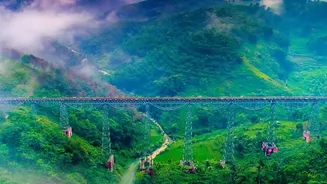
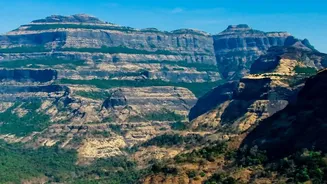
The section in question is the Sakleshpur-Subrahmanya Road Ghat, a marvel of engineering that cuts through the dense and rugged terrain of the Western Ghats. This line is characterized by its extreme geography: a steep ruling gradient of 1 in 50, meaning the track ascends or descends one metre for every 50 metres travelled horizontally. Compounding this challenge are 57 tunnels, 226 bridges, and over 100 sharp curves packed into this short distance. This landscape, which is also prone to landslides during heavy monsoons, has always posed operational difficulties for trains, requiring strict speed controls and specialized procedures to ensure safe passage. The route was originally a metre-gauge line, and its conversion to broad gauge did not erase the inherent challenges of its topography.
More Than Just a Standard Train
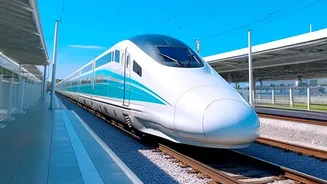
A standard Vande Bharat rake is not equipped to handle such a treacherous route off the shelf. Recognizing this, a special 20-coach train was manufactured by the Integral Coach Factory (ICF) in Chennai specifically for this purpose. The key innovation is the inclusion of an Automatic Emergency Braking (AEB) system. On conventional trains, crew attach separate 'banker' locomotives to provide additional braking power and control on steep descents, a process that is impractical for the aerodynamic, integrated Vande Bharat trainsets. The AEB system solves this problem by being built directly into the train, designed to automatically apply the brakes if the speed exceeds the mandated limit of 30 kilometres per hour on this ghat section, providing an essential layer of safety without external assistance.
The Guardians of Safety
The final authority on whether the Vande Bharat can run here rests with India's top railway safety bodies. Personnel from the Research Designs and Standards Organisation (RDSO), the railways' premier R&D wing, are on board during the trials, which began around mid-August 2026. They are meticulously assessing every aspect of the train's performance, including its acceleration, braking efficiency, stability on curves, and the reliability of the new AEB system under real-world conditions. These trials are scheduled to last for several days to gather comprehensive data. Once the trials conclude, the RDSO will submit its detailed report to the Commissioner of Railway Safety (CRS) and the Railway Board. Only after securing their unequivocal approval can commercial operations begin, ensuring that passenger safety remains the absolute priority.