



The Unbroken Paddy-Wheat Cycle
The story of modern Punjab agriculture is the story of the Green Revolution. To ensure national food security, farmers were encouraged to adopt high-yielding varieties of wheat and paddy (rice). This strategy was phenomenally successful, but it locked
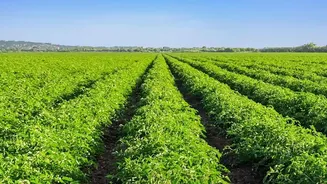
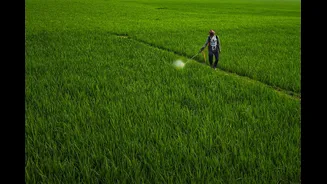
the state into a monoculture. Today, paddy is grown on over 80% of the agricultural area during the Kharif season, followed by wheat on nearly 90% of the land in Rabi season. This cycle is sustained by a robust system of government procurement at a Minimum Support Price (MSP), which provides farmers with a stable, predictable income and insulates them from market fluctuations that affect other crops. This economic safety net has made the paddy-wheat combination the default, and most rational, choice for farmers for decades.
The Staggering Environmental Cost
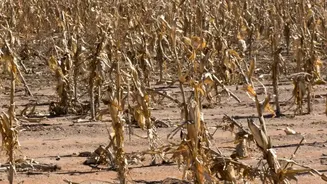
The primary victim of this cycle is water. Paddy is a water-guzzling crop, and its cultivation has led to a catastrophic decline in Punjab's groundwater table. A recent study from Punjab Agricultural University (PAU) warned that the state is losing over 50 cm of groundwater annually. In many central districts, the water table has plummeted to over 30 meters below ground level. Decades ago, canals were a primary source of irrigation, but by 2025, tubewells accounted for nearly 77% of irrigation, a complete reversal. This over-extraction is forcing farmers to drill deeper wells at immense cost, with some spending lakhs on submersible pumps. The crisis is so severe that experts warn of desertification. Beyond water, the monoculture has also led to soil degradation and increased pest attacks.
The Economic Impasse for Farmers
While the environmental imperative to diversify is clear, the economic reality for farmers is complex. The entire agricultural ecosystem—from machinery to market yards—is built around paddy and wheat. Switching to alternative crops like maize, cotton, pulses, or oilseeds involves significant risks. These crops lack the assured procurement and guaranteed MSP that paddy and wheat enjoy. A recent study calculated that for a farmer to be economically neutral when switching from paddy, the break-even price for maize would need to be around ₹2400 per quintal and cotton around ₹6700 per quintal, prices not always guaranteed in open markets. While a maize-wheat system is more environmentally sustainable, it currently generates significantly lower net returns for the farmer than the paddy-wheat system. Essentially, farmers are being asked to take a financial risk for a collective environmental benefit.
Government Push and Persistent Hurdles
Successive governments have been aware of this issue for decades, with the first major report on diversification dating back to 1986. Recent efforts have intensified. In 2026, the Punjab government expanded a scheme to promote maize cultivation, offering financial assistance of ₹17,500 per hectare to farmers who switch from paddy. Both the central and state governments are promoting missions for oilseeds, pulses, and horticulture. However, these efforts face an uphill battle. Experts argue that the incentives offered are often one-time payments, which cannot compete with the year-on-year security of paddy MSP and subsidies on power and fertilisers that are skewed in its favour. For diversification to succeed, it must be as profitable and risk-free for the farmer as the existing system, which requires building new supply chains, processing facilities, and robust procurement mechanisms for alternative crops.