





The Communication Blind Spot
For as long as we have explored the Moon, we have relied on a direct line of sight to talk to our machines and astronauts. If a lander or rover can’t “see” the Earth, it goes silent. This is a massive problem for the ambitious goals of the Artemis program,
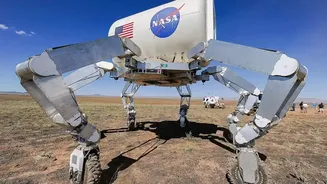
which is targeting the lunar South Pole. In this rugged, cratered region, the Earth hangs low on the horizon, frequently blocked by mountains and the Moon's own curvature. This creates long communication blackouts, severely limiting where we can land and how far rovers can explore. For missions to the lunar far side, direct communication is simply impossible. As dozens of government and commercial missions prepare to launch in the coming years, this old method of 'phoning home' simply won't be enough to handle the traffic or the technical demands.
An Internet for the Moon
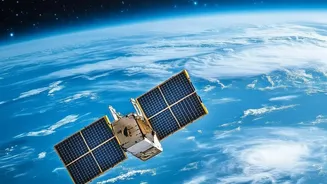
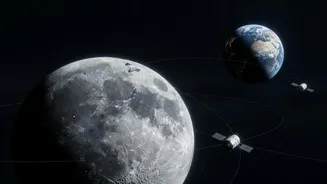
NASA's solution is an ambitious architecture called LunaNet. Think of it as a plan to build an internet and GPS system for the Moon. Instead of every mission pointing a dish back to Earth, they will connect to a local network of satellites orbiting the Moon. This network of lunar relays will bounce signals around the Moon and back to Earth, eliminating blackouts and providing continuous coverage, even on the far side. LunaNet is designed to be an open, interoperable system, allowing international partners and private companies to connect their missions and even add their own satellites to strengthen the network. The European Space Agency, for example, is developing its own compatible Moonlight initiative.
More Than Just a Better Signal
LunaNet promises to deliver much more than just a stable video feed. The system is designed to provide three core services. The first is networking, using smart protocols that can handle the delays and disruptions common in space, storing data until a clear path is available. The second is Position, Navigation, and Timing (PNT) services. This is the Moon's version of GPS, allowing landers to pinpoint their landing sites with incredible accuracy and rovers to navigate autonomously without constant guidance from Earth. Finally, the network itself will become a tool for science, with its sensors and antennas able to conduct atmospheric research and even radio astronomy.
A New Commercial Frontier
In a strategic shift, NASA isn't building this entire network itself. Instead, under its Lunar Communications Relay and Navigation Services (LCRNS) project, the agency is acting as a customer, paying commercial companies to provide these services. This approach is designed to stimulate a new commercial marketplace in lunar space. In late 2024, NASA awarded a major contract to Houston-based Intuitive Machines, which became the first commercial LCRNS provider. The company, already known for landing its Odysseus spacecraft on the Moon, is now tasked with deploying and operating a constellation of lunar relay satellites. This private-public partnership mirrors the successful strategy used to resupply the International Space Station, aiming to lower costs and accelerate innovation.
Unlocking the Lunar Future
The first of these commercial relay satellites is already well underway. A satellite named Altus-1 is scheduled to launch with Intuitive Machines' third lander mission in late 2026. Recently, NASA delivered a key piece of navigation hardware for integration into the satellite, marking a significant milestone in making LunaNet a reality. When operational, this satellite and its successors will be game-changers. They will enable long-duration science missions in permanently shadowed craters, allow rovers to explore the mysterious lunar far side, provide a crucial safety net for Artemis astronauts, and lay the digital foundation for a permanent human settlement on the Moon. This isn't just about better reception; it's about building the essential infrastructure for a sustained human and robotic presence in a new world.