








An Indispensable Zest
In India, the lemon, or nimbu, is more than just a fruit; it's a cultural cornerstone. Its presence is felt everywhere, from balancing the heat in spicy curries to being a key ingredient in offerings at temples. The sour, acidic tang is essential in countless
regional dishes, like the celebrated lemon rice, or Chitranna, of the south, and the popular street food bhelpuri. The term 'nimbu' itself is often used interchangeably for both lemons and limes, highlighting its ubiquitous role in daily life. Spiritually, lemons are seen as purifying agents in Hindu traditions and even as a shield against misfortune. This deep integration into culinary and cultural practices has made India one of the largest lemon producers in the world.
The Citrus Heartlands
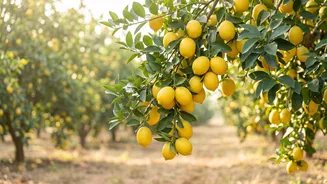
While lemons are grown across the country, a few key regions form the backbone of India's citrus production. Andhra Pradesh leads the pack, contributing a significant portion of the country's total output. Following closely are states like Gujarat, Maharashtra, Karnataka, and Madhya Pradesh. These states provide the ideal subtropical climates where lemon trees thrive. Within these larger regions, specific towns and districts have become synonymous with lemon cultivation. For instance, the town of Indi in Karnataka's Vijayapura district is famously known as the 'Land of Lemons' and has a lemon-growing tradition stretching back over a century.
Celebrating the Star Varieties
India's diverse climate has given rise to several celebrated lemon varieties, each with a unique character. The Kagzi lemon, often called Kagzi nimbu, is perhaps the most famous. Grown extensively across the country, its name refers to its paper-thin peel ('kagzi'). It is prized for its high juice content and strong aroma. The variety grown in Indi, Karnataka, known as Indi Lime, even received a Geographical Indication (GI) tag in 2023. In the east, particularly West Bengal, the Gondhoraj Lebu reigns supreme. Translating to 'king of fragrance', this lemon is cherished not for its juice, which is sparse, but for its incredibly powerful and unique aroma that can elevate any dish. From Assam comes the Kaji Nemu, another GI-tagged variety, which is elongated, seedless, and celebrated for its juicy, refreshing tartness.
From Soil to Market
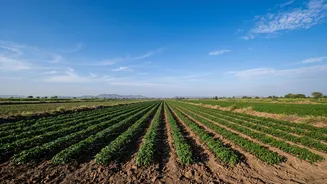
The journey of a lemon from a flower to our tables is a long one, filled with challenges for the farmers. Lemon cultivation is a major economic driver in rural areas, particularly in states like Andhra Pradesh and Maharashtra. However, farmers often face hurdles such as pests, diseases like fruit canker, and the unpredictability of the weather. Erratic rainfall and drought conditions can severely impact yields, leading to market shortages and price volatility. As recently as September 2026, low arrivals and high festive demand caused prices to surge dramatically in markets like Nellore, a major hub in Andhra Pradesh. Despite these challenges, the cultivation of lemons remains a vital part of India's agricultural landscape, supporting the livelihoods of countless farming communities.