



A Cosmic Event Unseen
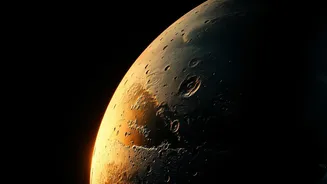
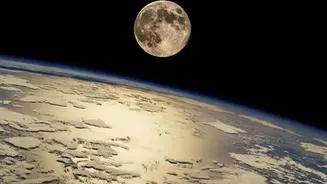
Sometime between April and May of 2024, an object likely the size of a six-story building slammed into the Moon. The impact, which went completely undetected by telescopes on Earth or in space at the time, unleashed a colossal amount of energy, creating
a massive new feature on the lunar surface. It wasn't a flicker in the sky that gave it away, but the painstaking work of scientists comparing images of the Moon's surface taken years apart. The discovery highlights that even our closest celestial neighbour is an active, evolving world, still being shaped by the powerful forces of the solar system.
The Serendipitous Discovery
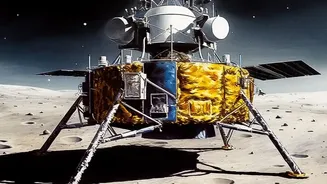
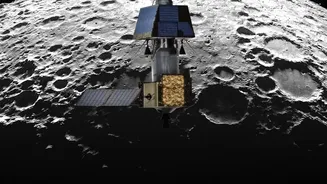
The crater was found not with a bang, but with a click. Robert Wagner, a scientist working with data from NASA's Lunar Reconnaissance Orbiter (LRO), was performing a routine check of lunar maps when he noticed an unusually bright spot. By comparing newer images from 2025 to older ones, he confirmed the appearance of a massive new scar. The LRO, which has been circling the Moon since 2009, provided the crucial 'before-and-after' evidence needed to identify the feature, now officially named McGetchin crater. This find underscores the immense value of long-term observation missions in capturing rare cosmic phenomena.
Putting the Record-Breaker in Perspective
The headline-making claim is impressive and specific: this crater is three times bigger than the previous record-holder found by the LRO. The new McGetchin crater measures about 222 metres (728 feet) across, wide enough to swallow two football fields. Its predecessor for the largest newly formed crater observed by the LRO was significantly smaller. While the Moon is covered in ancient craters that are vastly larger, McGetchin is the biggest scar scientists have had the chance to study that was formed in our time. Such an impact is estimated to be a once-in-a-century event, making this a genuinely rare observation.
A Natural Laboratory
A fresh crater like this is a scientific goldmine. Most lunar craters are ancient, worn down by eons of space weathering and subsequent smaller impacts. McGetchin, however, is pristine. It gives scientists an unparalleled look at the cratering process itself, showing how rock and dust (regolith) are thrown across the surface. Furthermore, the impact excavated material from below, providing a clean sample of the Moon's geology that is normally hidden. Data shows the area around the crater is now significantly cooler at night, suggesting the impact 'fluffed up' the soil, changing its thermal properties in a way that can be studied for years to come.
Why It Matters for Future Missions
This discovery is more than just an academic curiosity; it has practical implications for the future of space exploration. As nations like India and agencies like NASA plan for sustained human presence on the Moon, understanding the modern impact environment is critical. Studying how far debris was thrown from the McGetchin impact helps engineers design safer habitats and equipment. It’s a potent reminder that the Moon is not a static, grey desert. It's an active environment where such collisions, though rare on this scale, are a constant factor that must be planned for to ensure the safety of future lunar astronauts and infrastructure.