





Beyond Traditional Silicon
For decades, the solar industry has been dominated by silicon-based panels. While reliable and increasingly affordable, they are approaching their physical limits. A standard single-junction silicon cell has a theoretical maximum efficiency of around
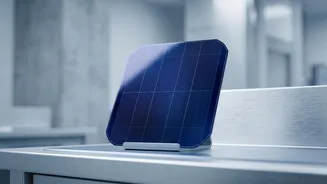
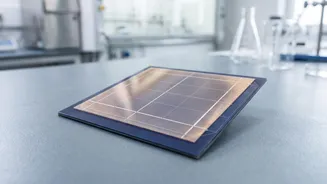
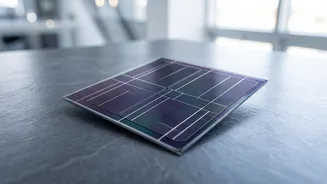
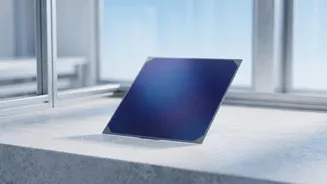
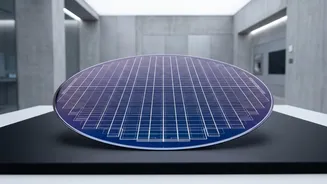
30%. In practice, the best commercial panels installed on rooftops and in solar farms today typically operate in the 22-24% range. This physical ceiling has prompted scientists to explore new materials and structures. The most promising of these is the tandem solar cell, which works by stacking two different photovoltaic materials. The top layer, often made from a material called perovskite, captures high-energy light like blue and green wavelengths, while the bottom silicon layer absorbs the lower-energy red and infrared light that passes through. This multi-layered approach allows the cell to harvest a much broader spectrum of sunlight, smashing efficiency barriers that a single material cannot overcome.
Why 30 Percent Is a Game-Changer
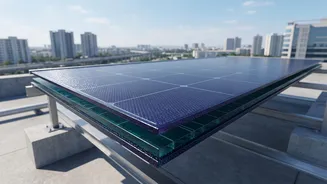
Surpassing the 30% efficiency mark is more than just a new record; it is a crucial proof-of-concept for the commercial future of tandem technology. Recent breakthroughs from research institutions and companies have shown certified lab efficiencies reaching as high as 34%. These results, confirmed by independent testing bodies, demonstrate that tandem cells are not just a theoretical curiosity but a viable path to generating significantly more power from the same physical area. For India, which has ambitious goals of installing 500 GW of renewable energy capacity by 2030, this leap in efficiency is profound. More efficient panels mean that solar farm developers can generate more electricity from a smaller land footprint, reducing costs associated with land, mounting structures, and cabling. For rooftop installations, it means homeowners and businesses can produce more power from limited roof space, accelerating their return on investment. This increased power density is a key factor in improving the overall economics of solar projects.
The Perovskite Promise and Its Hurdles
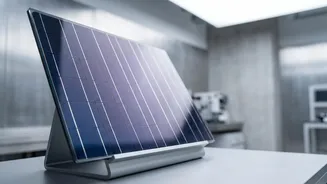
The magic ingredient in most of these high-efficiency tandem cells is perovskite. This class of materials is not only highly efficient at converting light to electricity but also potentially cheaper to manufacture than silicon. However, perovskites have historically had an Achilles' heel: durability. Early versions would degrade quickly when exposed to moisture, heat, and even oxygen, making them unsuitable for the 25-year lifespan expected of commercial solar panels. The latest research is squarely focused on solving this stability problem. Scientists are developing new encapsulation techniques and engineering the material's chemical structure to make it more robust. Recent tests have shown encapsulated cells retaining over 80% of their initial performance after thousands of hours under stress conditions, a major step toward commercial reliability. While significant progress has been made, proving long-term field durability remains the final frontier before widespread adoption.
The Road from Lab to Market
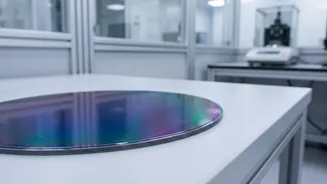
Achieving a record in a laboratory is one thing; manufacturing millions of panels at a competitive cost is another. The journey from a small, square-centimetre lab cell to a full-sized commercial module is complex. Challenges include scaling up the manufacturing process to produce large, uniform perovskite layers and ensuring consistent quality. Several companies and research groups are now building pilot production lines to tackle these exact issues. In Australia, a project aims for commercial use by 2027, working directly with a manufacturer to translate lab success into a viable product. In India, an IIT Bombay-incubated startup has already developed a tandem cell with nearly 30% efficiency and is receiving government support to establish a pilot manufacturing facility. These initiatives are critical for refining manufacturing techniques and driving down costs, with the goal of making tandem cells not just more efficient, but economically superior to conventional panels.