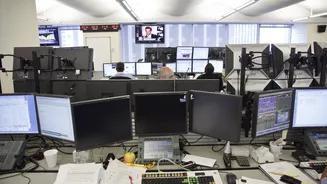







A seismic event is shaking up Wall Street. AI safety startup Anthropic just launched one of history's largest IPOs, but this is more than just a massive number. It's a defining moment for the entire artificial intelligence industry.
An IPO of Historic Proportions
Anthropic, the company
behind the AI assistant Claude, began trading on the Nasdaq under the ticker ANT after raising a staggering $81.3 billion. The company priced its 980 million shares at $83 each, above the initial range, signaling intense investor demand that was reportedly seven times oversubscribed. This monumental debut gives the company a valuation of approximately $1.5 trillion, making it one of the largest public offerings on record and a landmark event for the tech sector. The sheer scale of the deal has reset expectations for AI companies, providing public markets with their first pure-play investment vehicle for a frontier AI developer.
Who Is Anthropic, and Why the Hype?
Founded by former OpenAI executives, Anthropic has positioned itself as a leader in creating reliable and steerable AI systems. Its primary product is Claude, a family of large language models known for their sophisticated capabilities in tasks like coding, analysis, and document processing, making them particularly popular with enterprise clients. Unlike competitors who have focused heavily on consumer-facing chatbots, Anthropic has carved out a powerful niche in the corporate world. This focus, combined with benchmark tests showing its top models outperforming rivals, has fueled belief in its long-term potential and justified, in the eyes of investors, its colossal valuation.
The Big Tech 'Frenemies' Club
This IPO is not just Anthropic's story; it's a strategic masterclass by its biggest backers, Amazon and Google. Following the IPO, Amazon and Google hold non-voting stakes of 14.6% and 13.4%, respectively. Their relationship with Anthropic is complex and circular: they are simultaneously investors, customers, distributors, and competitors. Anthropic has committed to spending hundreds of billions on cloud computing services from Amazon and Google over the next decade. In return, Amazon and Google not only profit from providing this essential infrastructure but now also hold a massive paper gain on their equity, creating a deeply intertwined ecosystem that has drawn scrutiny from regulators.
A Litmus Test for the AI Gold Rush
For years, the AI boom has been defined by private valuations and the infrastructure companies that power it, like chipmaker Nvidia. Anthropic's IPO changes that by providing a public benchmark for a frontier AI model developer. Its performance on the stock market will serve as a bellwether for the entire sector, influencing how investors value competitors like OpenAI and how much capital continues to flow into AI. If Anthropic thrives, it could validate the sky-high spending on AI infrastructure. However, any weakness could raise serious questions about the sector's path to profitability and whether the current excitement has created an unsustainable bubble.
Navigating the Risks Ahead
Despite the successful IPO, Anthropic faces significant challenges. The company has disclosed enormous future spending commitments for computing and infrastructure, totaling over $900 billion. This highlights the capital-intensive nature of developing cutting-edge AI. Furthermore, the AI landscape is fiercely competitive, with giants like Google, Microsoft, and Meta Platforms, along with a host of other startups, all vying for market share. There is also the risk of model commoditization, where increasing competition could drive down prices and squeeze profit margins. Investors will be watching closely to see if Anthropic's revenue growth can outpace its massive costs and justify its premium valuation.