





The Classic Concentric Circles
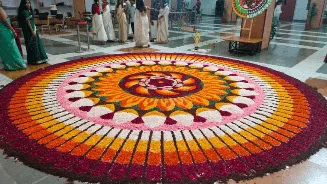
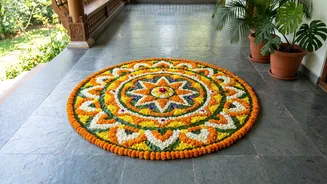
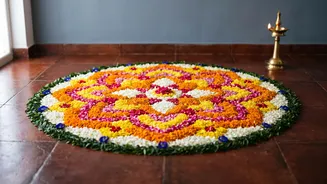
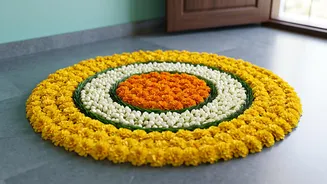
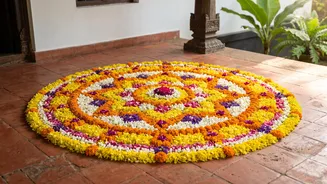
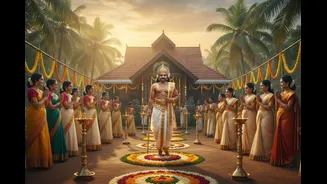
The most traditional and beginner-friendly pookalam is built on concentric circles. This design is deeply symbolic, with the circular shape representing unity, eternity, and the cyclical nature of life. Starting with a small central point, you simply
add rings of flower petals, expanding outwards. For an easy start, begin with a small circle of bright yellow marigolds. Add a ring of pure white jasmine or thumbapoo petals around it, followed by a wider band of orange marigolds. You can continue adding layers to fit your space. The beauty of this design is its simplicity and the visual impact created by contrasting colours. It is the perfect canvas to understand how different petals work together and is the foundational pattern from which most other complex designs evolve.
The Sacred Nilavilakku
The nilavilakku, or traditional brass lamp, is a powerful symbol in Kerala, representing knowledge, prosperity, and the dispelling of darkness. Incorporating it into your pookalam pays homage to this cultural icon. To create an easy nilavilakku design, start by outlining a simple lamp shape with chalk. You don't need to capture every intricate detail. Focus on the base, a slender stem, and the top where the flame sits. Fill the body of the lamp with white flower petals like jasmine. For the flame, use a vibrant combination of yellow and orange marigold petals, blending them slightly to create a fiery effect. You can place this motif in the centre of a simple circular pookalam or have it stand alone for a minimalist, yet deeply meaningful, design.
The Expressive Kathakali Face
Kathakali is the iconic dance-drama of Kerala, known for its elaborate makeup that tells a story through colour and expression. While a full Kathakali pookalam is incredibly complex, a simplified version is achievable and makes for a stunning tribute. Focus on the most recognizable elements. Outline a simple face shape. Use green petals or dyed rice for the noble 'Pacha' character's cheeks, a key feature of the makeup. Create the distinctive white border, known as the Chutti, using dense white petals like jasmine or tuberose. You can suggest the ornate headgear with a simple arch of bright red or orange flowers above the face. This design is a beautiful way to represent Kerala's rich artistic heritage without getting lost in overwhelming detail.
The Playful Elephant Motif
Elephants are deeply woven into the cultural fabric of Kerala, representing royalty, strength, and festivity. An elephant motif is a popular, though often complex, pookalam element that can be simplified for beginners. Instead of attempting a full-body design, focus on a simple silhouette. You could outline just the head with its majestic trunk and large ears. Use a single, dense colour for the body, such as white jasmine petals, or even green leaves for contrast against a colourful circular background. A small marigold for the eye is a simple finishing touch. This design adds a touch of playful grandeur to your entrance and celebrates an animal synonymous with the spirit of Kerala.
The Graceful Lotus Bloom
The lotus holds a sacred place in Indian culture, symbolizing purity, beauty, and spiritual enlightenment. As a pookalam design, it can be the star of the show. An easy way to create it is to make it the central element of your floral carpet. Start by drawing a large, simple lotus with eight to twelve petals. Fill the petals with soft pink rose petals or arali (oleander), using white petals to create a distinct outline for each petal. The centre of the lotus can be filled with bright yellow marigolds. This central lotus can then be encircled with one or two simple rings of green leaves or contrasting flowers. The result is an elegant and serene design that is both visually striking and rich with meaning.