


A Celestial Celebrity's New Secret
The Beta Pictoris system is something of a rock star in the astronomical world. Located just 63 light-years from Earth, it’s young, bright, and relatively close, making it a perfect laboratory for studying how planetary systems form. For decades, scientists
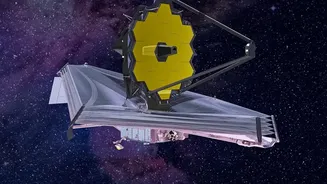
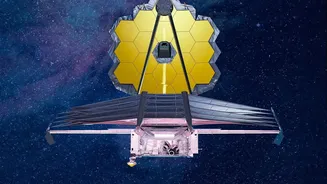
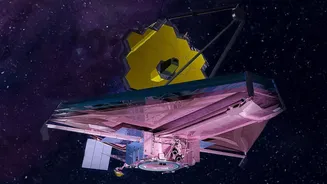
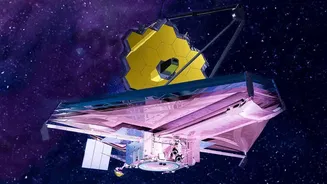
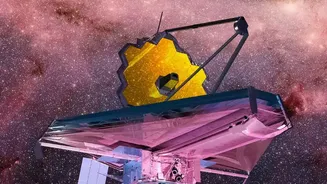
have pointed their best instruments at it, mapping its vast disk of dust and debris and confirming the existence of two massive gas giants, Beta Pictoris b and c. The system was considered familiar territory, a place where the major discoveries had likely already been made. But the James Webb Space Telescope (JWST), with its unparalleled power, has just proven that even our most-watched neighbours can still hold profound surprises. Tucked away in this famous system, Webb has unveiled a third giant planet, now named Beta Pictoris d.
Meet Beta Pictoris d
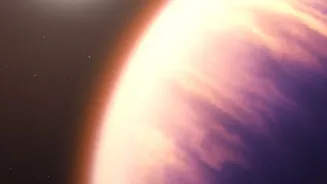
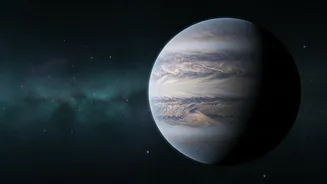
The newly discovered world is another gas giant, estimated to be at least twice the mass of Jupiter. This makes it the smallest of the three known planets orbiting the young star, which is only about 23 million years old—a mere infant compared to our 4.6-billion-year-old Sun. Its discovery makes Beta Pictoris only the second known planetary system to have at least three directly imaged planets. While finding another planet is always exciting, the real story behind Beta Pictoris d isn’t just that it exists, but how it managed to stay hidden for so long in one of the most scrutinized patches of our sky, and the revolutionary method Webb used to finally bring it into the light.
The Challenge of Finding Hidden Worlds
Finding exoplanets is incredibly difficult. They are extremely faint compared to the blazing stars they orbit. The most common methods involve looking for the tiny dip in starlight as a planet passes in front of its star (the transit method) or trying to capture a faint speck of light from the planet itself (direct imaging). Beta Pictoris b was one of the very first exoplanets ever to be directly imaged, a landmark achievement in its own right. But Beta Pictoris d was elusive. It was lost in the glare of its star and the surrounding dusty disk, invisible to previous imaging techniques. To find it, scientists needed a completely new trick.
Webb's Chemical Fingerprinting Power
Instead of looking for a faint point of light, the team of astronomers used one of Webb’s most powerful instruments, the Near-Infrared Spectrograph (NIRSpec). This tool doesn't just take a picture; it breaks down light into its component wavelengths, creating a 'spectrum'. Within that spectrum, scientists can identify the unique chemical fingerprints of different molecules. While observing the Beta Pictoris system, they detected a chemical signature that didn't belong to the star or the other known planets—it was the distinct trace of a massive planet's atmosphere. It was the first time a planet had been discovered this way, not by seeing it, but by detecting its atmospheric breath. This technological feat is a game-changer, proving Webb can sniff out hidden worlds that are otherwise impossible to see.
A New Era of Planet Hunting
The discovery of Beta Pictoris d does more than just add a new member to a famous planetary family. It fundamentally changes the playbook for finding exoplanets. It demonstrates that Webb's technology can uncover worlds that other telescopes would miss, opening up a new frontier for discovery. Scientists can now re-examine other well-known systems and hunt for the chemical traces of planets they never knew were there. It suggests that our current census of nearby exoplanets might be incomplete, with potentially many more worlds waiting to be found not by their light, but by their chemistry. The discovery is a massive return on investment for the multi-billion-dollar Webb telescope, showcasing its ability to not just do what other telescopes do better, but to do things no other telescope has ever done before.