



An Inch at a Time
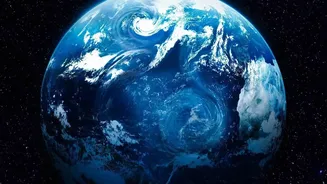
Don't sell your beachfront property just yet. The Pacific's shrinkage is happening at a rate of about 2.5 centimetres (one inch) per year. While that seems insignificant, over millions of years it adds up to a dramatic planetary rearrangement. This isn't
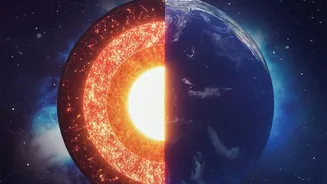
about water levels changing, but the physical basin of the ocean itself getting smaller. The cause is one of the most powerful forces on the planet: plate tectonics. The Earth's crust is not a single, solid shell; it's broken into massive pieces, or plates, that are constantly in motion, floating on the semi-molten mantle beneath them.
The Ring of Fire's Hidden Role
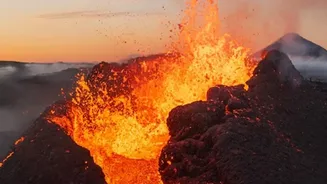
The secret to the Pacific's slow demise lies around its edges. The ocean is famously bordered by the 'Ring of Fire,' a 40,000-kilometre-long, horseshoe-shaped belt known for its intense volcanic and seismic activity. This is not a coincidence. The Ring of Fire marks a massive collection of subduction zones, places where one tectonic plate is forced to slide underneath another. The vast Pacific Plate is being pushed under the continental plates of Asia, Australia, and the Americas. This process effectively consumes the old oceanic crust, pulling the continents closer together and gradually shrinking the ocean basin.
A Tale of Two Oceans
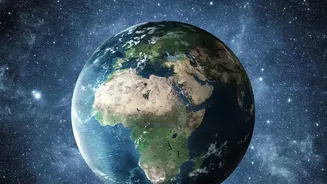
While the Pacific shrinks, another major ocean is doing the exact opposite. The Atlantic Ocean is getting wider by about 4 centimetres (1.5 inches) every year. Unlike the Pacific, the Atlantic has a massive underwater mountain range called the Mid-Atlantic Ridge running down its center. Here, new crust is being created as magma rises from the mantle, pushing the Americas away from Europe and Africa. The Atlantic has very few subduction zones to consume this new crust, so it is in a phase of expansion. This contrast is a perfect illustration of the dynamic, cyclical nature of our planet’s oceans.
The Birth of a New Supercontinent
So, what is the ultimate destiny of a shrinking ocean? Geologists believe the slow closing of the Pacific is part of a supercontinent cycle that occurs over hundreds of millions of years. Just as the last supercontinent, Pangea, broke apart millions of years ago, scientists predict a new one will eventually form. Using supercomputer simulations, many geologists now believe that in the next 200 to 300 million years, the Pacific Ocean will close completely, causing the Americas to collide with Asia and Australia. This future supercontinent has already been given a name: Amasia.
A Planet in Motion
The shrinking of the Pacific is a profound reminder that the Earth is not static. The ground beneath our feet and the oceans that separate continents are part of a slow, epic dance that has been going on for billions of years. The same forces that cause devastating earthquakes and spectacular volcanic eruptions along the Ring of Fire are the very same forces that are redrawing the map of our world. This process happens on a timescale that is difficult for humans to comprehend, but it is a fundamental part of our planet's life story. It's a geological epic, playing out one centimetre at a time.