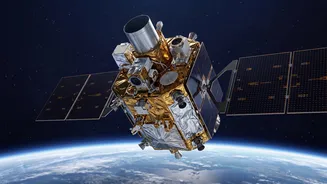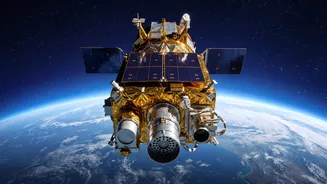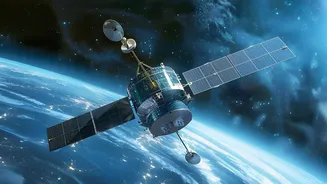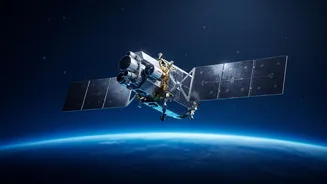


One of NASA’s most productive space observatories has taken its final bow. After almost 22 years of revolutionizing our view of the cosmos, the Neil Gehrels Swift Observatory plunged back to Earth on 4 November, closing a remarkable chapter in astronomy.
What Was the Swift Observatory?
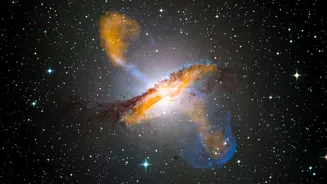
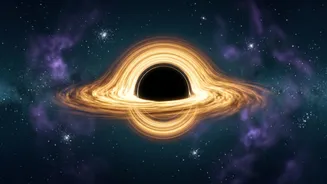
Launched on 20 November 2004, the Swift Observatory was a robotic space telescope with a unique mission: to hunt for gamma-ray bursts (GRBs). These are the most powerful explosions in the universe, often signaling the birth of a black hole or the collision of dead stars, but they are incredibly brief, sometimes lasting less than a second. Before Swift, studying these fleeting events was nearly impossible. Swift’s key innovation was its ability to live up to its name. Upon detecting a GRB with its main Burst Alert Telescope, the spacecraft could autonomously and rapidly pivot its other instruments—an X-ray Telescope and an Ultraviolet/Optical Telescope—to the source, often within a minute. This allowed scientists, for the first time, to study the fading afterglow of these cataclysmic events in detail, providing a wealth of information about their origins and environments.
A Legacy of Cosmic Discovery
Originally planned for a two-year mission, Swift exceeded all expectations, operating for over two decades and transforming multiple fields of astrophysics. During its long career, the observatory detected over 2,000 gamma-ray bursts. In 2005, it captured the first-ever afterglow from a short GRB, confirming theories that these events are caused by the merger of dense objects like neutron stars. It also spotted some of the most distant objects ever seen, including a GRB from when the universe was just 630 million years old. But Swift's work didn't stop with GRBs. It became a versatile 'target of opportunity' observatory, studying more than 1,400 supernovae (exploding stars), witnessing stars being torn apart by black holes, and even observing comets and asteroids within our own solar system. Data from the mission has been cited in roughly 7,000 scientific papers, cementing its status as one of NASA's most scientifically productive missions.
Why the Mission Had to End
Like all satellites in low-Earth orbit, Swift was subject to atmospheric drag, which gradually lowered its altitude. This effect was significantly accelerated in recent years by increased solar activity as the sun approached the peak of its 11-year cycle. The energized sun caused Earth's upper atmosphere to expand, creating more drag on the spacecraft and pulling it downward faster than anticipated. In a dramatic effort to save the observatory, NASA contracted a commercial company, Katalyst Space, for a high-risk rescue mission. The plan involved sending a robotic 'tug' to dock with Swift and boost it into a higher, more stable orbit. However, the servicing spacecraft suffered technical issues after its launch in July 2026 and the rescue attempt was called off in August. With its orbit continuing to decay, Swift made its final scientific observation on 20 October 2026, as the atmospheric drag became too great for it to maintain a steady aim.
A Fiery Farewell
The mission concluded on 4 November 2026, when the 1,450ndegree spacecraft made its uncontrolled re_entry into Earth's atmosphere. U.S. Space Force tracking confirmed the event occurred at 7:39 a.m. EST over the North Sumatra region of Indonesia. As it plunged through the dense lower atmosphere at immense speed, most of the observatory was expected to burn up, appearing like a man_made meteor. While NASA acknowledged that some durable components might survive the descent, the agency assessed the risk of harm to anyone on the ground as low, at approximately 1 in 2,100. There have been no reports of debris causing any damage. The fiery end marks the final chapter for the physical spacecraft, but not for its scientific contributions.