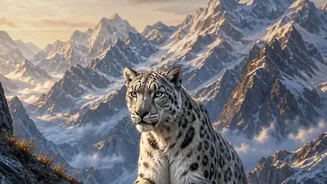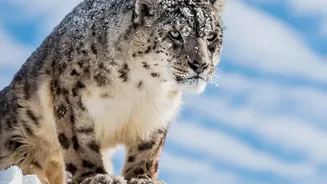






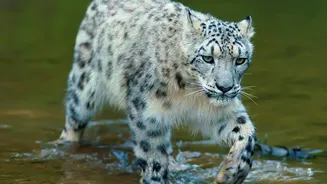
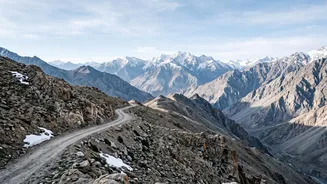
Known as the 'Ghost of the Mountains', the elusive snow leopard is the pride of Ladakh's starkly beautiful landscape. Now, a new wildlife initiative aims to do more than just offer a glimpse of this rare cat; it wants to redefine its very survival.
A New Vision for a Fragile Icon
In
early October 2026, the UT of Ladakh launched India's first-ever high-altitude wildlife safari focused on the snow leopard. This isn't just another tourist attraction. Flagged off during Wildlife Week, the initiative is a carefully designed programme to blend responsible tourism with community-led conservation. The goal, as stated by officials, is not merely to boost tourist numbers but to create a sustainable model where conservation and local livelihoods can thrive together. The project is a collaboration between the Snow Leopard and High-Altitude Nature Conservation (SHAN) Society and Ladakh's Department of Forest, Ecology, and Environment. It starts with a fleet of specially designed, open-back vehicles intended to operate on specific, approved routes to prevent the environmental damage caused by illegal off-roading that can disturb the region's fragile ecosystem.
Putting Communities in the Driver's Seat
The core philosophy of the safari is to make local communities 'equal partners' in conservation. For years, the relationship between villagers and snow leopards has been fraught with conflict, as the predators often prey on domestic livestock, which is a primary source of income for many families. This new model aims to change that dynamic by directly linking local income to the snow leopard's presence. The safaris will be operated by trained local drivers and wildlife guides, creating direct employment. Twenty local youths are already being trained in bird identification and spotting, and will be equipped with binoculars to guide visitors. The idea is to create a sense of custodianship, turning residents into the first line of defence for the wildlife they once saw as a threat. By ensuring that the economic benefits of tourism flow directly into the community, the initiative incentivises the protection of the animal and its habitat.
More Than Just a Safari
The project extends beyond vehicle-based tours. It builds on a foundation of community-centric conservation models that have been evolving in Ladakh for years, such as the award-winning Himalayan Homestay Program. This program encourages tourists to stay with local families, providing an authentic cultural experience while generating income that helps offset livestock losses. The new safari initiative complements this by creating more specialised roles like nature interpreters and eco-tourism entrepreneurs. Furthermore, a 'Wild Animal Felting Programme' has been launched, involving 50 women from several villages who will use local wool and traditional skills to create handicrafts, linking conservation with artisanal enterprises. These efforts aim to build a diverse 'conservation economy' where the well-being of the ecosystem is directly tied to the prosperity of its people.
Protecting a Global Stronghold
The stakes in Ladakh are incredibly high. According to the first-ever Snow Leopard Population Assessment in India (SPAI) report, India is home to an estimated 718 snow leopards. Of these, a staggering 477 are found in Ladakh, making it the single most important region for the species' survival in the country. The safari routes are being carefully mapped out across key habitats, including Hemis National Park—which has the highest recorded density of snow leopards in the world—and the Changthang and Karakoram Wildlife Sanctuaries. By regulating tourist movement and using trained guides, the administration hopes to minimise disturbance to wildlife while offering a rare, respectful opportunity to witness these majestic animals in their natural element. This regulated approach is crucial for protecting the apex predator and, by extension, the entire high-altitude ecosystem that depends on it.