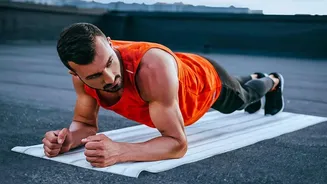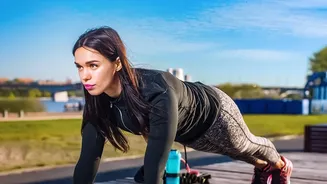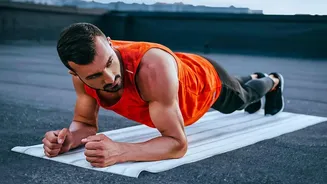


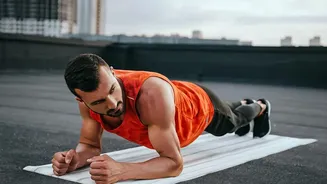
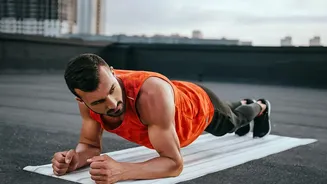
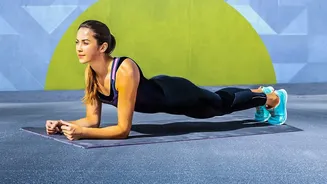
1. Walking Plank (Up-Down Plank)
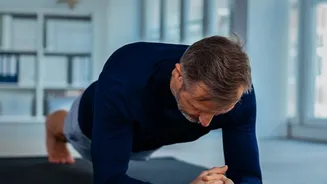
Also known as a commando plank, this dynamic variation adds an upper-body challenge while forcing your core to work harder to prevent your hips from rocking. It builds strength in the shoulders, chest, and arms, all while intensely engaging your deep
core stabiliser muscles. How to do it: Start in a high plank position with your hands directly under your shoulders and your body in a straight line. Keeping your core tight, lower your right forearm to the floor, followed by your left, so you are in a forearm plank. From there, push back up to a high plank, one hand at a time, starting with the right. Continue this up-and-down movement, alternating which arm leads to ensure balanced strength development. The key is to move slowly and with control, minimising any swaying in your hips.
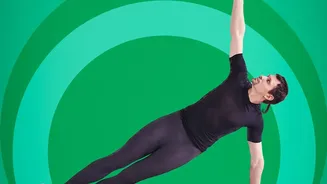
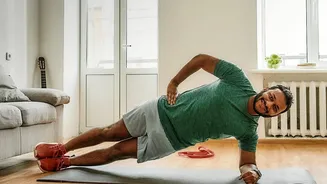
2. Side Plank with Hip Dip
The standard side plank is excellent for your obliques (the muscles on the sides of your abs), and adding a hip dip makes it even more effective. This small movement increases the time under tension and the range of motion, intensely targeting the obliques and improving lateral spine stability. How to do it: Lie on your right side and prop yourself up on your right forearm, with your elbow directly beneath your shoulder. Stack your feet and lift your hips until your body forms a straight line from your ankles to your head. From this position, slowly lower your right hip until it almost touches the floor. Squeeze your obliques to raise your hip back to the starting position. Perform a set number of repetitions before switching to the other side.
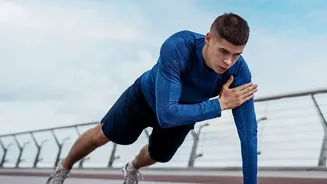
3. Plank with Shoulder Tap
This modification introduces instability, forcing your core muscles to fire intensely to keep your torso stable and prevent rotation. It's a fantastic exercise for building anti-rotational strength, which is crucial for protecting your spine during daily activities and sports. It also strengthens your shoulders, glutes, and arms. How to do it: Begin in a high plank position, with your hands under your shoulders and feet slightly wider than hip-width for a more stable base. Keeping your core engaged and your hips as still as possible, lift your right hand and slowly tap your left shoulder. Return your right hand to the floor with control, then repeat on the other side, tapping your right shoulder with your left hand. The goal is to eliminate any rocking or twisting in your hips as you alternate taps.
4. Reverse Plank
While traditional planks focus on the front of your body, the reverse plank targets your posterior chain—the muscles along the back of your body. It's a powerful exercise for strengthening your glutes, hamstrings, and lower back, while also opening up your chest and shoulders. This helps improve posture, especially if you spend a lot of time sitting. How to do it: Sit on the floor with your legs extended straight out in front of you. Place your hands on the floor slightly behind your hips, with your fingertips pointing toward your feet. Press into your hands and heels to lift your hips off the ground until your body forms a straight line from your shoulders to your heels. Squeeze your glutes and keep your core tight to prevent your hips from sagging. Hold the position, ensuring you keep your neck in a neutral position.
5. Plank Jacks
If you want to add a cardiovascular element to your core workout, plank jacks are the perfect choice. This variation gets your heart rate up while challenging your core to maintain stability during a dynamic movement. It works your abs, glutes, and the inner and outer thigh muscles. How to do it: Start in a high plank or a forearm plank, with your core engaged and your body in a straight line. Your feet should be together. Keeping your upper body stable, jump your feet out to the sides, wider than your mat. Then, quickly jump them back together to the starting position. It’s like performing a jumping jack with your legs while holding a plank. Maintain a steady rhythm and focus on keeping your hips level throughout the movement, avoiding any bouncing up and down.