






The Billion-Dollar Problem in Orbit
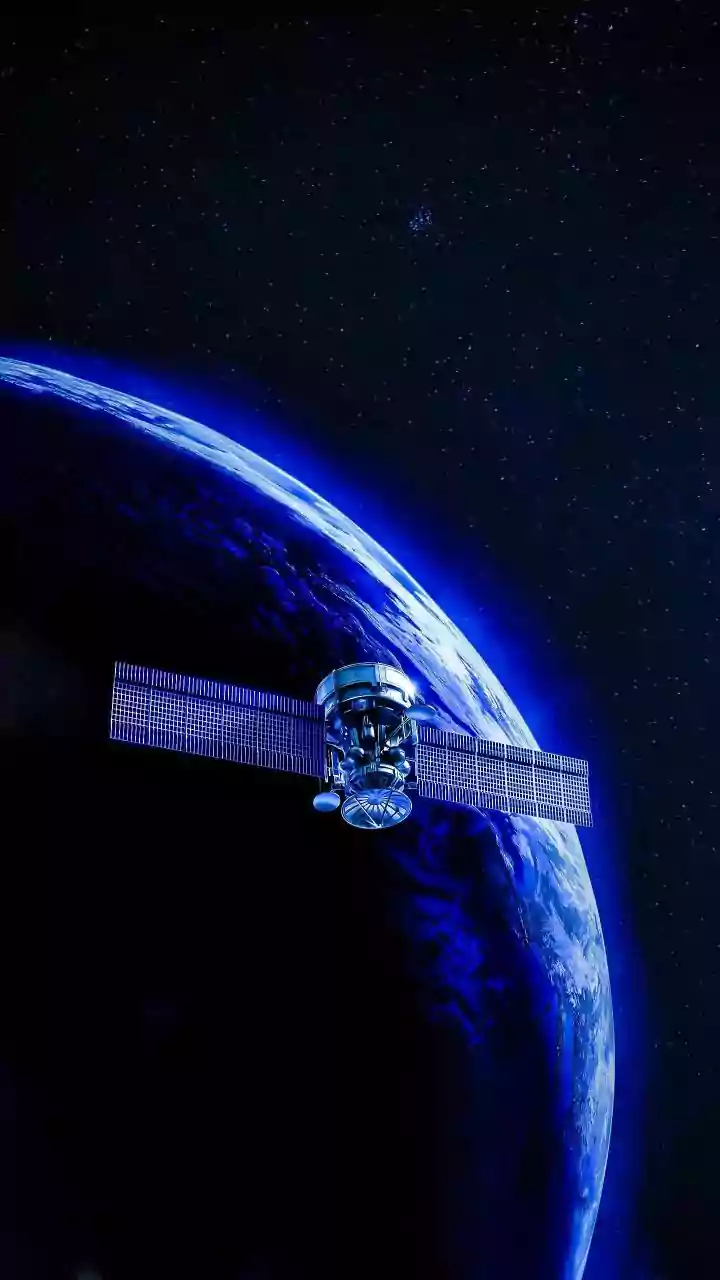
A communications satellite in geostationary orbit (GEO), hovering 36,000 kilometres above Earth, is a marvel of engineering. It's also incredibly expensive, with deployment costs often exceeding $200 million. For years, the operational life of these assets
was dictated by a simple, frustrating factor: their fuel tank. When the propellant needed for tiny orbital adjustments, known as station-keeping, runs low, the satellite's mission is over. This is true even if its sophisticated communications payload—the part that actually generates revenue—is perfectly healthy. The result is a forced retirement, turning a valuable asset into a piece of orbital debris and forcing companies to launch a costly replacement. This disposable model has defined the space industry for half a century, but a fundamental shift is now underway.
Enter the 'Jetpack' for Satellites
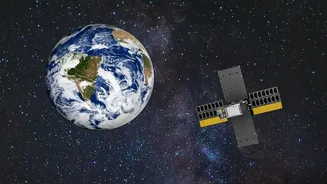
Mission Extension Pods, or MEPs, are a groundbreaking solution to this problem. Think of them as compact, externally mounted 'jetpacks' for aging satellites. These pods are designed to attach to a client satellite and take over its propulsion and station-keeping duties, effectively giving it a new fuel tank and a new lease on life. Developed by companies like Northrop Grumman through its subsidiary SpaceLogistics, these pods represent a smaller, more affordable evolution of earlier life-extension technologies. Unlike their predecessors, which would dock permanently with a satellite, the new model involves a robotic vehicle installing the pod and then moving on, allowing one service vehicle to support multiple clients.
Robots to the Rescue
The magic behind installing these pods is the Mission Robotic Vehicle (MRV). Launched in July 2026, the first MRV is a sophisticated servicing spacecraft equipped with two dexterous robotic arms. Developed in a partnership between Northrop Grumman and the U.S. Defense Advanced Research Projects Agency (DARPA), this vehicle is designed to perform complex tasks in the harsh environment of space. On a typical mission, the MRV will travel to geostationary orbit, grab a waiting MEP, rendezvous with the client satellite, and use its robotic arms to securely attach the pod. After installation, control of the pod is handed over to the satellite operator, and the MRV is free to perform its next servicing task. The latest mission saw an MRV launched with three MEPs to service satellites for operators including Intelsat and Optus.
A New Business Model for Space
This technology is about more than just clever engineering; it's about reshaping the economics of space. The global on-orbit servicing market is projected to grow into a multi-billion dollar industry by the early 2030s. For a fraction of the cost of a replacement, satellite operators can add six or more years of revenue-generating life to an existing asset. This provides immense capital efficiency and operational flexibility. Companies like Northrop Grumman and Japan's Astroscale are at the forefront, offering a range of services from simple life extension to debris removal and future capabilities like in-orbit repair and refueling. The ultimate goal is to create a sustainable, circular economy in space where satellites are designed to be serviced, repaired, and refueled from the start.
The Future is Serviceable
The successful deployment of Mission Extension Pods marks a turning point for the space industry. It signals a move away from single-use assets toward a model of long-term, sustainable infrastructure. Beyond simple life extension, robotic platforms like the MRV are designed for a future that includes in-space assembly, payload upgrades, and even active debris removal. The development of standardized docking and refueling interfaces, such as the Passive Refueling Module (PRM) approved by the U.S. Space Force, will further accelerate this trend. As orbital lanes become more congested, the ability to service, move, and safely retire satellites will not just be a business advantage but an operational necessity for ensuring the long-term viability of space activities.