




Why Limit Cars?
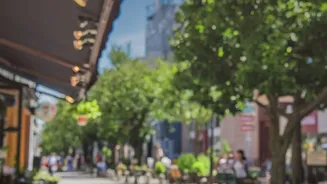
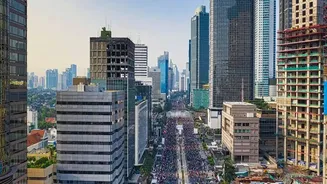
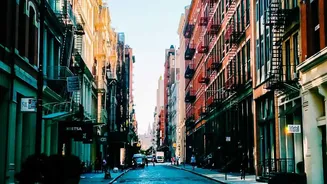
For decades, urban planning prioritised the private car, leading to congestion, pollution, and public spaces dominated by asphalt. Now, a shift is underway towards a model that puts people first. By implementing traffic restrictions—from full pedestrianisation
to low-emission zones and parking regulations—cities aim to reduce congestion, improve air quality, enhance public safety, and create more liveable, economically vibrant communities. These measures encourage a shift to walking, cycling, and public transport, transforming noisy, polluted thoroughfares into thriving public spaces. While often met with initial skepticism, especially from business owners fearing a loss of customers, the results often prove the opposite.
Copenhagen, Denmark: The Pioneering Stroll
Copenhagen's main shopping street, Strøget, is one of the world's earliest and most famous examples of pedestrianisation. In 1962, the city made the bold decision to close the 1.1 km street to vehicle traffic as a temporary experiment. The idea was controversial; critics argued that Danes didn't have a culture of outdoor public life and merchants feared financial ruin. However, the experiment was a resounding success. Pedestrian activity soared, and businesses soon discovered that a traffic-free environment actually boosted revenue. The 'temporary' closure was made permanent in 1964 and has since expanded, inspiring countless cities worldwide to follow suit. Today, up to 80,000 people walk Strøget daily in the summer, demonstrating the long-term value of designing cities for people, not just for cars.
Pontevedra, Spain: The City-Wide Model
While many cities create pedestrian pockets, the Spanish city of Pontevedra took it a step further. Starting in 1999, the city began a radical transformation to give the streets back to the people, led by Mayor Miguel Anxo Fernández Lores. The model focuses on eliminating through-traffic—cars just passing through the centre—by creating loops that prevent drivers from taking shortcuts. Parking is limited to short 15-minute stops or pushed to large, free car parks on the city's fringe. As a result, CO2 emissions in the city have dropped by 66%, and the city centre's traffic has been reduced from 80,000 vehicles per day to just 7,000. The streets, many of which now lack formal sidewalks and exist as single shared platforms, prioritise pedestrians, who now make up two out of every three journeys in the city.
Freiburg, Germany: The Sustainable Suburb
Freiburg's Vauban district offers a different model: a purpose-built sustainable neighbourhood designed to be 'low-traffic'. Developed on a former military base in the late 1990s, Vauban's residential streets are largely free of parking spaces. While deliveries and drop-offs are allowed at a walking pace, residents who own a car must purchase a spot in one of the large garages on the community's periphery. This simple restriction has had a profound effect. With streets free from parked cars, there is more space for children to play and for neighbours to socialise. The design was a result of strong community collaboration and is supported by excellent public transport links, bike paths, and local amenities, proving that sustainable mobility requires not just restrictions, but practical alternatives.
The Common Thread: Reclaiming Public Space
From the 'superblocks' of Barcelona, which restrict through_traffic to create pedestrian_priority mini_neighbourhoods, to the restoration of Seoul's Cheonggyecheon Stream, which replaced a highway with a public park, the global trend is clear. These projects are not simply about banning cars; they are about reimagining what a street can be. By managing vehicle access, cities are creating safer, cleaner, and more socially connected environments. They are turning spaces once dedicated to movement and storage of vehicles into places for community life, commerce, and recreation. The success of these international examples provides a powerful blueprint for how urban centres everywhere, including in India's bustling cities, can be transformed for the better.