




A Partnership on the Horizon
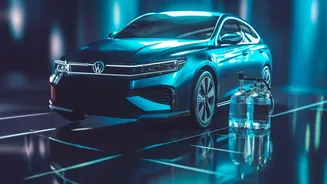
Recent reports indicate that Volkswagen AG is in advanced discussions to sell a majority stake in its Indian subsidiary, Skoda Auto Volkswagen India Pvt. Ltd., to the JSW Group. This potential deal would mark a pivotal shift from Volkswagen’s long-standing
strategy of wholly owning its operations in the country. While discussions are ongoing and hurdles like valuation still remain, the move signals Volkswagen's increasing willingness to cede control to a local partner to infuse fresh capital and reinvigorate its presence in the world's third-largest auto market. The talks, which reportedly began three years ago, have evolved from a focus on manufacturing plant usage to a potential equity partnership.
The Struggle for a Foothold
Despite its global might and a portfolio of brands ranging from Skoda and Volkswagen to Audi and Porsche, the group has found it challenging to gain significant traction in India. After more than 20 years, the combined market share of its brands hovers around 2.5%, well below the company's revised goal of 5% by the end of the decade. The ambitious 'India 2.0' strategy, which led to the launch of localized models like the Volkswagen Taigun and Skoda Kushaq, has delivered some growth but has not been enough to challenge the dominance of market leaders. Operating independently has meant bearing the full cost of manufacturing and product development in a notoriously price-sensitive market.
Why a Local Partner Makes Sense
Partnering with a powerhouse like JSW Group, which already has a foothold in the auto sector through a joint venture with MG Motor India, could provide the strategic leverage Volkswagen needs. For Volkswagen, a local partner could offer deeper market insights, help in managing costs through greater localisation, and share the financial burden of future investments, especially with the industry shifting towards electric vehicles (EVs). The German automaker has already scaled back its planned EV platform investment in India, and a partnership could be crucial for navigating the country's upcoming stricter fuel efficiency norms. For JSW, a deal would provide access to Volkswagen’s world-class engineering platforms and a fast track to expanding its automotive ambitions.
What This Means for the Brands
The operational leadership in India for the VW group currently rests with Skoda. A change in control would likely reshape the strategy for both the Volkswagen and Skoda brands, which form the core of the mass-market offerings. The primary benefit would be a potential boost in competitiveness. With a strong Indian partner, the group could become more agile in responding to local tastes and pricing pressures. This could lead to a broader portfolio, potentially including a re-entry into the crucial sub-4 metre SUV segment, which currently accounts for a large portion of the market. The future of the luxury brands under the umbrella—Audi, Porsche, and Lamborghini—would also be part of the new structure, though their niche focus may be less directly impacted by a mass-market-oriented strategy shift.