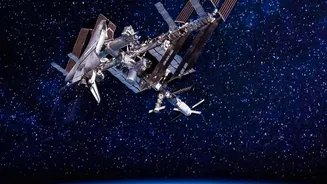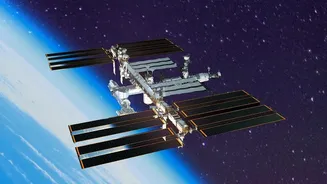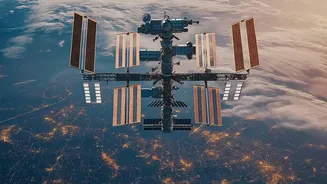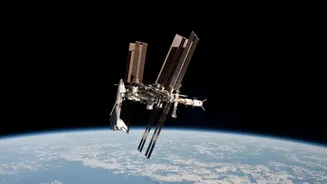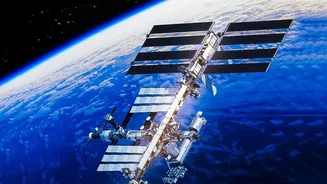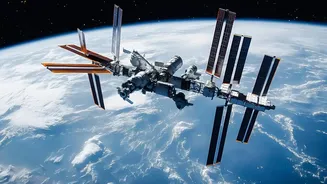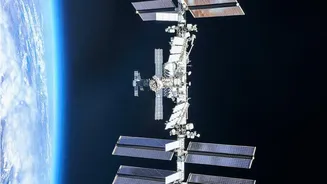


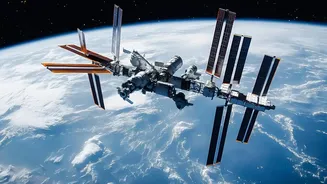
The International Space Station just received a critical lifeline. After a multi-year effort involving complex spacewalks, a NASA-led team has completed a massive power upgrade, ensuring the orbiting laboratory can continue its vital mission.
An Aging Power Grid in Orbit
For over
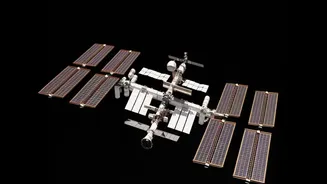
two decades, the International Space Station (ISS) has relied on eight large solar array wings to power everything from life support to groundbreaking science experiments. First launched in 2000, these original arrays were designed with a 15-year service life. While they performed remarkably well beyond that, their power output had begun to naturally degrade over time, a bit like an old laptop battery that can no longer hold a full charge. This posed a growing challenge. As the station's scientific ambitions and commercial partnerships expanded, so did its appetite for electricity. The aging power system was becoming a limiting factor for the cutting-edge research and new modules planned for the station's final, crucial years of operation. A significant boost was needed to secure its future.
The iROSA Solution
Instead of replacing the enormous original arrays—a complex and risky proposition—NASA and its partners opted for a clever augmentation strategy. The solution was the ISS Roll-Out Solar Array, or iROSA. These are smaller, more efficient, and more powerful solar arrays that use advanced solar cell technology. Delivered to the station in pairs via SpaceX Dragon cargo spacecraft, the iROSAs were designed to be installed over a portion of the existing arrays. This allows them to work in tandem with the original system, boosting its output. Each iROSA, though smaller, generates a significant amount of power. Once unfurled, they are about 63 feet long and use a unique roll-out deployment that relies on stored energy in their carbon composite booms rather than complex motors. This innovative design was tested on the station years ago and proved to be the perfect technology for the upgrade.
A Spacewalking Marathon
Installing the eight new iROSAs was a monumental task that unfolded over five years, beginning in 2021. It required a total of 18 separate spacewalks performed by multiple crews of astronauts. These extravehicular activities, or EVAs, are among the most demanding and dangerous tasks an astronaut can perform. During excursions lasting nearly seven hours, astronauts worked meticulously to install mounting brackets and then maneuver the 340-kilogram rolled-up arrays into place. The final installations, completed in late 2026 by NASA astronaut Anil Menon and Canadian Space Agency astronaut Joshua Kutryk, were particularly challenging, requiring them to pass the bulky array hand-to-hand to reach the installation site at the far end of the station's truss. The completion of the final spacewalk on November 5, 2026, marked the successful end of this long and complex construction project in space.
Powering the Future of Science
With all eight iROSAs installed and operational, the ISS's total available power has increased from about 160 kilowatts to 215 kilowatts—a jump of nearly 30%. This surge of new energy is a game changer for the station's operations through its planned retirement in 2030. The extra power will support a greater number of complex scientific experiments running simultaneously, from medical research to materials science. It is also critical for supporting new commercial modules, like those being developed by Axiom Space, which will eventually detach to form a private space station. This upgrade doesn't just keep the lights on; it energizes the next phase of commercial enterprise in low Earth orbit and ensures the ISS can continue to be a hub of innovation and discovery, while also supporting the activities needed for its eventual safe deorbit.