


The Global Forum in India's Tech Hub
SMOPS-2026, the International Conference on Spacecraft Mission Operations, held in Bengaluru, serves as a vital confluence for the world's space community. Jointly organised by ISRO, the Astronautical Society of India (ASI), and the International Academy
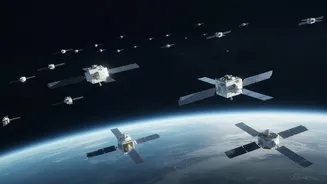
of Astronautics (IAA), its agenda is packed with the defining challenges of our time in space: managing large satellite constellations, automation, and ensuring the sustainable use of Earth's orbit. While the conference covers a broad range of topics from robotics to interplanetary missions, the undercurrent driving many discussions is the urgent need for effective Space Traffic Management (STM). It's a forum where theoretical designs meet the practical realities of keeping our orbital highways safe and operational for the burgeoning space economy.
The Core Problem: A Dangerously Crowded Sky
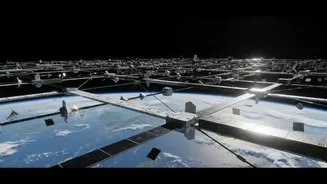
The problem is simple to state but immense in scale. Low-Earth orbit (LEO) is dangerously cluttered. Scientific models estimate there are well over a million pieces of debris larger than one centimetre. A collision with an object just 10 cm in size could shatter a satellite, creating thousands more pieces of debris. This has led to widespread concern about the Kessler Syndrome, a scenario proposed in 1978 where the density of objects becomes so high that collisions create a cascading chain reaction, potentially rendering entire orbits unusable for generations. With the number of active satellites now in the tens of thousands, driven by commercial mega-constellations, some experts believe we have already crossed the critical density threshold that Kessler warned about.
Question 1: Who Is the Air Traffic Controller for Space?
On Earth, air traffic is governed by strict, internationally agreed-upon rules. In space, no such system exists. The 1967 Outer Space Treaty provides a foundational framework, assigning responsibility for space objects to the nations that launch them, but it offers little in the way of practical operational rules. This creates a fragmented system where different nations and private companies follow varying standards. While organisations like the UN's Committee on the Peaceful Uses of Outer Space (COPUOS) have issued guidelines, they are non-binding. The lack of a unified regulatory body is a major political hurdle, with nations often reluctant to accept binding rules that could limit their freedom of operation in space.
Question 2: How Do We See and Track Everything?
Effective traffic management relies on knowing where everything is. Yet, tracking millions of objects, many smaller than a cricket ball and moving at hypersonic speeds, is a monumental technical challenge. Data is often fragmented, with different agencies using different tracking systems and standards. This is where Artificial Intelligence is becoming essential. AI and machine learning algorithms can fuse data from various sources—like ground-based radar and optical sensors—to create a more comprehensive picture of the space environment. These systems can predict collision risks far more effectively than manual analysis, filter out false alarms, and even suggest optimal avoidance manoeuvres, transforming STM from a reactive to a proactive process.
Question 3: Who Pays When a Collision Happens?
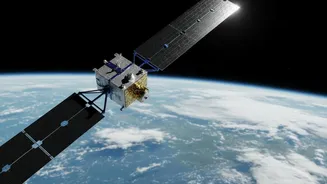
The legal and financial questions are just as thorny as the technical ones. If two satellites collide, who is at fault? How is liability determined and enforced, especially if one object is a piece of long-dead debris and the company that launched it no longer exists? These questions create significant uncertainty for the insurance industry and investors in the multi-billion dollar space economy. This has spurred the growth of a new commercial sector focused on Active Debris Removal (ADR). Companies like Japan's Astroscale and Switzerland's ClearSpace are developing technologies to capture and de-orbit defunct satellites and other large pieces of junk, with ClearSpace's first mission planned for 2026. However, the cost is enormous, and a sustainable business model remains a key challenge.