



A Mountain Measured
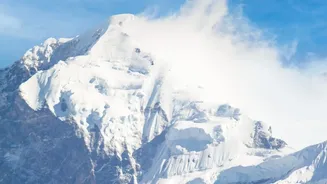
A team of expert surveyors from France's Haute-Savoie region have revealed that Mont Blanc now stands at 4,807.47 metres. This latest figure, captured in September, marks an increase of nearly two metres from the measurement taken in 2023, which was the lowest
recorded in recent memory. Expeditions to measure the iconic peak have been carried out regularly since 2001, using a combination of GPS technology and drones to build a precise picture of the summit. These biennial measurements create a valuable dataset for scientists tracking changes in the high Alps. While the latest reading shows a gain in height, it remains below the peak of 4,810.90 metres recorded in 2007.
The Shifting Cap of Snow and Ice
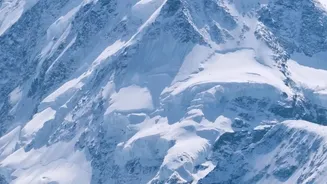
It’s important to understand that the rock summit of Mont Blanc is stable, located at an altitude of about 4,792 metres. The official height that makes headlines is determined by the thick dome of snow and ice that sits on top of the rock. This icy cap can be anywhere from 15 to 20 metres thick. Its depth, and therefore the mountain's overall height, changes from year to year based on weather conditions. The summit is not a fixed point but more like a giant, frozen sand dune that shifts with the elements. Think of it less as the mountain growing and more as its winter hat getting thicker or thinner.
Weather's Dominant Role
So, what causes these fluctuations? The primary drivers are short-term weather patterns, specifically wind and precipitation. At an altitude where polar-like conditions exist, strong winds can scour huge amounts of snow from the summit, effectively lowering its height. Conversely, a year with less wind and heavier winter snowfall can lead to greater accumulation, piling on the metres. The amount of summer melt also plays a crucial role. This is why experts caution against drawing a direct line from any single year's measurement to long-term climate change. The height can, and does, go up and down. Jean des Garets, chief surveyor for the region, noted that the summit is in 'constant motion' and that the mountain could very well be taller or shorter again in two years.
The Broader Climate Context
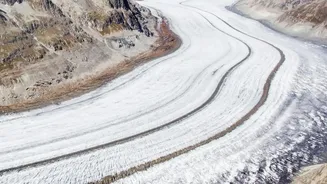
While the year-to-year height of Mont Blanc's ice cap is a story about weather, the long-term health of glaciers across the Alps is unequivocally a story about climate. Scientists are clear that an increase in the summit's altitude does not contradict the well-documented retreat of Alpine glaciers. Across the Alps, glaciers are shrinking at an alarming rate, having lost about half their total volume since the 1930s. Recent years have seen an 'explosion of melt rates' according to Swiss glaciologists, with some reports indicating Swiss glaciers lost 10% of their volume in just two years. This widespread melting is driven by hotter summers and reduced winter snowpack, which provides a protective layer for the ice.
Why One Peak's Height Matters
The regular monitoring of Mont Blanc provides a detailed case study, but its true value lies in how it draws our attention to the bigger picture. The retreat of Alpine glaciers has profound consequences, impacting everything from river flows that supply water to millions in Europe to the stability of the mountainsides themselves as permafrost thaws. This thawing can increase the risk of rockfalls and landslides. Though the ice on Mont Blanc's summit is at such a high, cold altitude that it rarely melts significantly, the visible changes there serve as a powerful symbol. They remind us that even the most immense and seemingly permanent features of our world are subject to change, reflecting the delicate balance of the planet's systems.