







India's Gaganyaan mission, set to make history as the nation's first human spaceflight, relies on intense preparation. A critical phase of this was the specialised training its astronauts underwent in Russia to master movement in microgravity.
A Leap for India's Space Ambitions
The Gaganyaan
project is one of the most ambitious undertakings by the Indian Space Research Organisation (ISRO). The objective is to demonstrate the capability to launch a crew of three astronauts into a Low Earth Orbit of 400 kilometres for a three-day mission and bring them back safely to Earth. This landmark mission will make India the fourth country in the world to achieve independent human spaceflight, following the Soviet Union (Russia), the United States, and China. The programme involves developing critical technologies like a human-rated launch vehicle (HLVM3), life support systems to create an Earth-like environment in space, and crew escape protocols to ensure astronaut safety above all else.
Why Russia? A Legacy of Collaboration
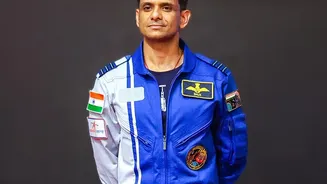
To prepare for such a complex mission, India partnered with Russia, a country with decades of expertise in human spaceflight. The four astronaut-designates, all experienced Indian Air Force pilots, completed a rigorous 13-month generic spaceflight training program at the Yuri Gagarin Cosmonaut Training Center in Star City, near Moscow. This facility is legendary in space history and has trained cosmonauts and astronauts from around the globe. The collaboration, formalised in an agreement between ISRO and Russia's space agency, builds on a long history of space partnership that dates back to the launch of India's first satellite, Aryabhata, on a Soviet rocket in 1975 and Rakesh Sharma's historic flight in 1984.
Inside the 'Vomit Comet'
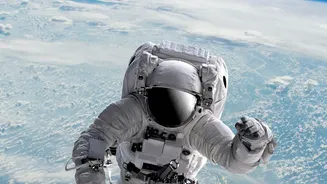
A key component of the Russian training was acclimatising the astronauts to weightlessness. This was achieved through flights on a specially modified Ilyushin Il-76 MDK aircraft. Often nicknamed the 'vomit comet', this type of plane performs a series of parabolic manoeuvres. It climbs sharply at a 45-degree angle, pushing passengers back in their seats with forces up to 1.8 times Earth's gravity, and then reduces thrust to enter a controlled freefall over the top of the arc. For about 25 to 30 seconds during this downward trajectory, everything and everyone inside the plane becomes weightless, floating as if they were in orbit. A typical flight involves 40 to 60 such parabolas, giving the crew precious minutes to adapt to a profoundly alien environment.
Practising for a Weightless World
These short bursts of microgravity are not for sightseeing. The astronauts used this time to practise fundamental skills for life in space. Simple tasks on Earth, like moving from one point to another, require a complete re-learning in a zero-g environment, where a small push can send you tumbling. The crew practised orientation, body control, and performing tasks while floating. Viral videos from the training showed the astronauts performing somersaults and moving effortlessly inside the cabin, which, while visually dramatic, is essential practice for mastering movement without the familiar pull of gravity. The training also included simulations of lunar and Martian gravity to prepare them for a range of extraterrestrial conditions.
The Journey Continues in India
The training in Russia, which concluded in March 2021, was just the beginning. After completing their generic training, the astronauts returned to India for mission-specific preparation at ISRO's own Astronaut Training Facility in Bengaluru. This phase focuses on the specifics of the Gaganyaan spacecraft, including training in custom-built simulators and mock-ups of the crew module. The astronauts are learning the intricate details of the systems they will operate, handling emergency procedures, and undergoing further physical conditioning, including yoga. This comprehensive training ensures that when the time comes, India's 'Gaganyatris' are fully prepared for every aspect of their historic journey.