







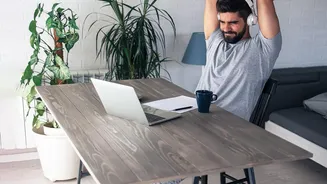
Why Your Desk Job Is So Demanding on Your Body
Sitting for prolonged periods is a modern workplace reality, but it takes a toll. When we sit for hours, we often slip into poor posture, with rounded shoulders and a forward-hunched head. This can lead to chronic neck and back pain, tight hips, and reduced
flexibility. Mentally, the lack of movement can cause energy levels to dip, making it harder to concentrate and stay productive throughout the afternoon. The physical stagnation and mental fatigue create a cycle that can impact both your well-being and your work performance.
Seated Cat-Cow for a Flexible Spine
One of the most effective ways to counteract a stiff back is by gently moving the spine. The seated cat-cow stretch is perfect for this. Sit at the edge of your chair with your feet flat on the floor and your hands on your knees. As you inhale, arch your back, push your chest forward, and look up toward the ceiling (Cow Pose). As you exhale, round your spine, tuck your chin to your chest, and let your shoulders curve forward (Cat Pose). Repeat this fluid movement five to ten times to awaken your spine and release tension in your upper back.
Neck Rolls and Tilts to Ease Tension
Neck pain is one of the most common complaints among office workers. To release this tension, sit tall and gently drop your right ear toward your right shoulder, holding for 15-30 seconds. Feel the gentle stretch along the left side of your neck. Slowly return to the center and repeat on the other side. Follow this with slow chin-to-chest tucks and gentle head rolls, but avoid rolling your head all the way back, as this can compress the neck. These simple movements can prevent stiffness and headaches.
Seated Spinal Twist for Posture and Digestion
Twists are excellent for improving posture and aiding digestion. Sit sideways in your chair or stay forward with your feet planted. Inhale to lengthen your spine. As you exhale, gently twist your torso to one side, using the armrest or the back of the chair for a deeper stretch. Hold for several breaths, feeling the stretch through your spine and torso. Return to the center and repeat on the opposite side. This movement helps keep your spine mobile and can relieve lower back discomfort.
Wrist and Finger Stretches to Prevent Strain
Constant typing and mouse-clicking can lead to wrist pain and repetitive strain injuries. To counteract this, extend one arm in front of you with the palm facing up. With your other hand, gently bend your fingers down toward the floor until you feel a stretch in your forearm. Hold for 20-30 seconds. Then, flip your hand so your palm faces down and gently pull your fingers toward your body. Repeat on both sides, and don't forget to spread your fingers wide and then make a fist several times to release tension.
Eagle Arms for Shoulder Release
Our shoulders often carry the brunt of our stress, hunching forward as we focus on screens. To open them up, try Eagle Arms. Extend your arms straight forward, then cross your right arm over your left. Bend your elbows and try to bring your palms to touch. If that’s too much, simply press the backs of your hands together. Lift your elbows and gently press your hands away from your face to feel a deep stretch between your shoulder blades. Hold for a few breaths, then unwind and switch sides. This pose is fantastic for releasing built-up tension across the upper back.