








An Alarming New Claim
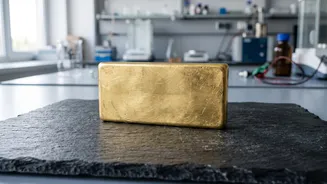
A recent investigation by media outlet Dainik Bhaskar has sent ripples through India's jewellery market. The report detailed an experiment where a significant amount of rhenium, a dense metal, was allegedly mixed with pure gold. The resulting ornament
was then taken to various testing centres and showrooms in Jodhpur, Rajasthan. According to the report, the adulterated piece not only passed tests on commonly used X-ray fluorescence (XRF) machines but was also able to secure a 22-carat (916 purity) hallmark from a hallmarking centre. The XRF machines reportedly failed to detect the presence of rhenium, instead reading the piece as having high gold purity. If true, this would mean a customer could unknowingly buy jewellery with substantially less gold than certified, leading to significant financial loss.
The Crucial Need for Confirmation
It is critical to note that these findings are from a single investigation and have not yet been independently confirmed by regulatory bodies or other metallurgical labs. The gold industry, which relies heavily on trust and standardised verification, operates on principles of repeatable and verifiable testing. A single experiment, especially one conducted by a non-specialist body, is treated with caution until it can be replicated under controlled conditions by accredited experts. This incident is not the first time concerns about sophisticated adulteration have surfaced; traders have previously raised alarms about other dense metals like iridium and ruthenium being used to cheat purity tests. However, the claim that a hallmarked item was compromised has brought the issue to the forefront, placing scrutiny on the entire verification ecosystem.
How Gold Purity Is Tested Today
In India, the Bureau of Indian Standards (BIS) governs the hallmarking of gold jewellery, which has been mandatory since 2021. This system was designed to protect consumers from exactly this kind of fraud. Jewellers must be registered with BIS and send their items to a BIS-recognised Assaying and Hallmarking Centre (AHC) for testing. At the AHC, items are typically tested using non-destructive XRF machines for an initial reading of the metal's composition. For definitive results, a more rigorous, destructive method called fire assay is the gold standard, where a sample is melted down to precisely measure its gold content. Once an item passes, it is laser-engraved with the three-part BIS hallmark: the BIS logo, the purity grade (e.g., 22K916), and a six-digit alphanumeric Hallmark Unique Identification (HUID) code.
Potential Gaps in the System
The recent controversy hinges on the limitations of the most common testing method: XRF analysis. These machines are fast and non-destructive, making them ideal for showrooms. However, they primarily analyze the surface of an item. Sophisticated adulteration could involve mixing a foreign metal deep within the gold, which a surface-level scan might miss. Furthermore, the accuracy of an XRF machine depends heavily on its calibration, the software it uses, and the skill of the operator. The Dainik Bhaskar report claims the machines they encountered were not calibrated to detect rhenium, a metal not typically expected in gold alloys. While fire assay at an AHC should theoretically catch any adulteration, questions remain about whether every single piece undergoes such rigorous testing or if batch-testing and over-reliance on initial XRF scans could create a loophole.
What This Means for Gold Buyers
For now, the BIS hallmarking system remains the most reliable guarantee of purity for consumers. The HUID code is a powerful tool, allowing anyone to verify the details of their jewellery—including purity, jeweller, and AHC—using the BIS CARE mobile app. The current controversy serves as a critical reminder for the industry and regulators to continually update their standards and testing protocols to stay ahead of potential fraud. While there is no widespread, confirmed evidence of rhenium adulteration in the market, the report highlights the importance of vigilance. For consumers, it reinforces the need to buy only from reputable, BIS-registered jewellers and to always insist on a bill that separately details the hallmarking charges and the HUID code for each item purchased.