






More Than Just a Walk with Sticks
Originating in Finland as a summer training method for cross-country skiers, Nordic walking is an enhanced walking technique that uses specially designed poles to work the upper body as well as the legs. Unlike regular walking, which primarily engages
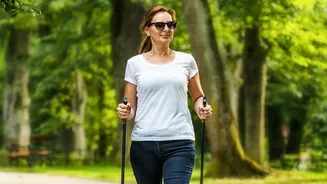
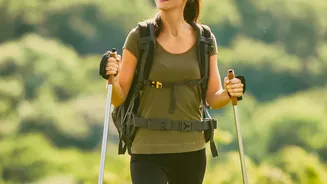
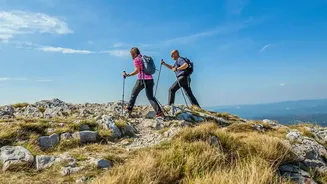
muscles below the waist, the addition of poles activates your shoulders, arms, back, and core. This transforms a simple stroll into a comprehensive fitness session, engaging up to 90% of your body's muscles compared to the 50% used in a standard walk. The movement is similar to cross-country skiing—you plant a pole in coordination with your opposite leg, using it to propel yourself forward. This action not only adds intensity but also provides a rhythmic and fluid motion that many find enjoyable.
The Full-Body Benefits
The most significant advantage of Nordic walking is its efficiency. By recruiting muscles in the chest, back, shoulders, and arms, it provides a host of benefits that regular walking cannot match. Research shows it can increase calorie burn by anywhere from 20% to over 60% compared to walking at the same pace, without a significant increase in perceived effort. This makes it an excellent choice for weight management. Furthermore, it improves cardiovascular health, builds upper-body strength, and can enhance posture by encouraging an upright stance. For those with joint concerns, the poles help distribute weight and can reduce the impact on knees and hips, making it a sustainable, low-impact activity. The poles also provide four points of contact with the ground, increasing stability.
Getting the Right Gear
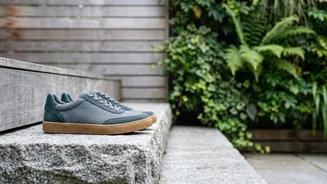
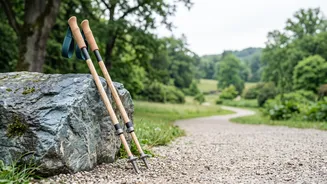
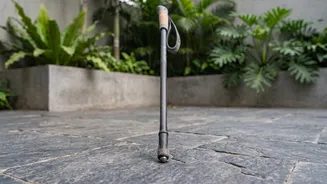
While it might be tempting to grab any old hiking poles, specific equipment is crucial for proper Nordic walking. Nordic walking poles are different from trekking poles, which are designed for stability on uneven terrain. Nordic poles are designed for propulsion. They are typically lighter and feature a unique glove-like strap system that allows you to push off through the strap and release your grip on the backswing. The right pole length is also important; if they are too short, you may slouch, and if too long, they can strain your shoulders. As for footwear, you don’t need specialized shoes to start. A comfortable pair of walking shoes or flexible trainers with good grip is perfectly suitable. Wear light, breathable clothing that allows for a full range of arm motion.
Mastering the Basic Technique
The core of Nordic walking is the coordination between your arms and legs. The movement is an exaggeration of your natural walking swing: as your right leg steps forward, your left arm swings forward to plant its pole. Maintain a good posture, standing tall with a slight lean forward from the ankles and keeping your eyes looking ahead, not at the ground. Swing your arms from the shoulder, not the elbow. Plant the pole at an angle between your front and back foot. As your arm swings backward past your body, push off the pole and open your hand, using the strap to maintain contact. This push-off is what engages your upper body muscles. It may feel awkward at first, but letting the poles drag behind you while walking normally can help your body find its natural rhythm.
Common Mistakes to Avoid
To get the most out of your workout and prevent bad habits, watch out for a few common errors. Many beginners plant the poles too far in front of them, like a hiking pole, which hinders propulsion and can strain joints. Another frequent mistake is using only the arms and not engaging the core and back, or bending the elbows too much instead of swinging from the shoulder. Ensure you maintain a relaxed grip; gripping the pole handle too tightly throughout the entire motion can cause tension. The technique relies on the strap system to push off as your hand opens. Finally, avoid moving the arm and leg on the same side together. If you find yourself doing this, drop the poles and just swing your arms naturally to reset your coordination.