







What is PRIMA?
PRIMA, short for the Probe far-Infrared Mission for Astrophysics, is a next-generation space telescope recently confirmed by NASA. As the first of a new "probe-class" of missions, it represents a significant step forward in our ability to study the cosmos.
The mission, led by NASA's Jet Propulsion Laboratory (JPL) with major contributions from Caltech and international partners including space agencies in Canada, France, Germany, and the UK, is designed to observe the universe in far-infrared light. This part of the electromagnetic spectrum is invisible to the human eye and even to telescopes like the James Webb Space Telescope (JWST), which primarily sees in near- and mid-infrared. By focusing on these longer wavelengths, PRIMA will be able to study cosmic processes and objects that are otherwise obscured by dust and gas, offering a fresh perspective on the universe's evolution.
Unveiling Cosmic Origins
The core purpose of PRIMA is to tackle some of the biggest questions in astrophysics. Its primary science goals include understanding how planets form, how galaxies and their central supermassive black holes grow together, and how heavy elements and cosmic dust have accumulated since the early universe. Nicky Fox, an associate administrator at NASA, stated that PRIMA will "unveil the obscure across cosmic time to better understand the formation of planets, stars, black holes, and even how water on Earth came to be." One of its most anticipated tasks is to quantify the role of water in the planet formation process. By studying the far-infrared signatures of elements and molecules like water, carbon, and oxygen in the dusty disks where planets are born, scientists can gain unprecedented insight into the building blocks of worlds, including potentially habitable ones.
A Leap in Technology
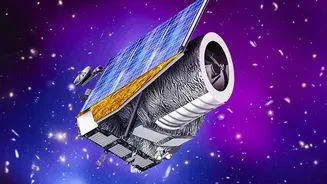
To achieve these ambitious goals, PRIMA will feature a 1.8-meter telescope cryogenically cooled to just a few degrees above absolute zero. This extreme cold is necessary to prevent the telescope's own heat from interfering with the faint far-infrared signals it aims to detect. The observatory will be equipped with two primary instruments. The first, PRIMAger, is an imaging polarimeter designed to map large areas of the sky. The second, FIRESS (Far-InfraRed Enhanced Survey Spectrometer), will analyze the light from cosmic sources to determine their chemical composition and physical properties. Together, these instruments will make PRIMA orders of magnitude more sensitive than previous far-infrared observatories like the Herschel Space Observatory and the Spitzer Space Telescope, bridging a crucial observational gap between JWST and ground-based radio telescopes.
The Road to 2033
With a projected cost of approximately $1.2 billion, not including launch, PRIMA has officially moved into its preliminary design phase, known as Phase B. This stage involves finalizing the mission's design and technology before it faces a confirmation review to proceed to full implementation. If all milestones are met, key hardware components from international partners are expected to be delivered around 2029, keeping the mission on track for its targeted 2033 launch. The mission is planned for a five-year operational life, during which it will conduct deep surveys of the sky. Significantly, about 75 percent of PRIMA's observing time will be open to the global scientific community, ensuring its powerful capabilities are used to answer a wide range of astronomical questions.