









A Pioneer in India's NewSpace Race
Founded in 2021 by a group of IIT Madras alumni, GalaxEye quickly became a notable name in India's burgeoning private space industry. The startup attracted significant investment with its ambitious goal: to build and launch a constellation of Earth observation
satellites featuring a world-first technology. This mission is part of a larger trend that has seen the Indian government encourage private participation to boost the nation's space economy, aiming to grow its global market share significantly in the next decade. For startups like GalaxEye, the path is paved with both immense opportunity and formidable challenges, from securing funding to navigating a complex regulatory landscape.
The Vision Behind Mission Drishti
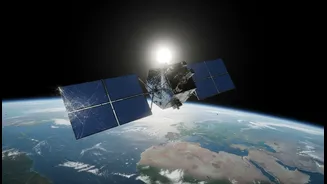
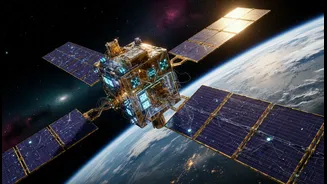
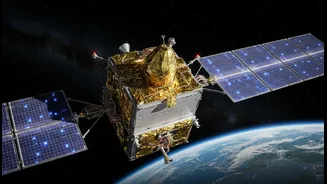
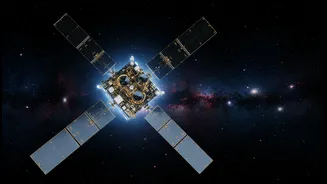
At the heart of GalaxEye's plan was Mission Drishti, centered on a satellite carrying a groundbreaking payload. The satellite was designed to be the world's first to combine Synthetic Aperture Radar (SAR) and optical sensors on a single platform, a technology the company calls OptoSAR. In simple terms, optical sensors work like a regular camera, capturing high-resolution photos in clear daylight. SAR, on the other hand, is an active sensing system that sends radar pulses to the ground and measures the echoes. This allows it to 'see' through clouds, darkness, and bad weather, providing a reliable stream of data 24/7. By fusing these two data streams, the Drishti satellite promised to deliver uniquely detailed and consistently available imagery for everything from disaster management and agriculture to defence and infrastructure monitoring.
What Went Wrong in Orbit
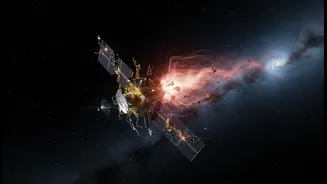
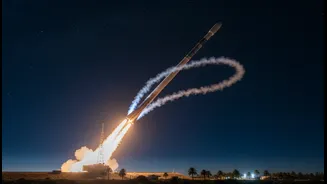
The Drishti satellite, India's largest privately built Earth observation satellite, was launched on a SpaceX Falcon 9 rocket on May 3, 2026. The initial phase of the mission was a success. GalaxEye confirmed that the satellite successfully established communication, deployed its systems, and validated several critical functions from its mission control centre in Bengaluru. However, during the final stage of this early orbit phase, the spacecraft encountered a severe geomagnetic solar storm. Following this, communication became intermittent before being lost entirely. While recovery efforts continued, the company has stated that the likelihood of re-establishing contact is low. An initial analysis suggests that radiation from the extreme space weather event likely damaged a critical onboard system.
The 'Learning Win' Philosophy
Despite the loss of the satellite, GalaxEye's leadership has been resolute in framing the mission as a valuable experience. Co-founder and CEO Suyash Singh stated that the mission provided invaluable engineering insights that will directly strengthen future missions. Before the anomaly occurred, the satellite had already validated its core spacecraft systems, deployment mechanisms, attitude control, and onboard computing. This successful operational phase demonstrated GalaxEye's capability to design, build, launch, and operate complex space systems. This mindset is common in the 'NewSpace' industry, where rapid iteration and learning from failures are seen as essential steps toward eventual success, much like the early days of pioneers like SpaceX.
The Bigger Picture and Next Steps
The experience with Mission Drishti is a stark reminder of the inherent risks in the space industry. However, it also highlights the resilience of India's private space ecosystem. GalaxEye has already announced that it is incorporating the lessons learned into its next-generation spacecraft. The company plans to accelerate its move towards bringing more of its supply chain and manufacturing in-house to ensure greater control and reliability. Building on the data and experience gained, GalaxEye aims to launch two new and improved OptoSAR satellites within the next 24 months. This quick turnaround demonstrates a commitment to the iterative 'fail fast, learn faster' approach that defines many successful tech ventures.