
A Poem's Controversial Premiere
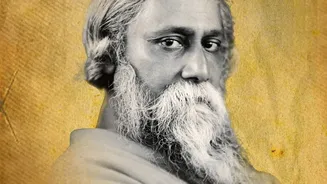
The story begins on December 27, 1911. The Indian National Congress held its annual session in Calcutta (now Kolkata), and on the second day, a new song was performed. Composed by Nobel laureate Rabindranath Tagore, the piece was titled 'Bharoto Bhagyo
Bidhata' ('Dispenser of India's Fortune'). It was sung by Tagore's niece, Sarala Devi Chowdhurani, and a group of students. However, its debut was immediately shrouded in controversy. King George V was visiting India, and the pro-British press mistakenly reported that Tagore's song was an ode to the monarch. In reality, a different song, 'Badshah Hamara' by Rambhuj Chaudhary, was sung in the King's honour that day. The confusion arose because the Congress session also passed a resolution of loyalty to the Emperor, and some newspapers conflated the two events. This misunderstanding would shadow the song for decades.
Tagore's Vehement Clarification
Rabindranath Tagore was deeply distressed by the suggestion that his composition was in praise of a British king. He clarified his position multiple times over the years. In a 1937 letter, he expressed his amazement and turmoil at being asked by a friend in the British service to write such a song of felicitation. He explained that his response was to create a song celebrating the 'Bhagya Bidhata'—the eternal 'Dispenser of India's Destiny' who has guided the nation through ages. He stated emphatically that this guide could never be King George V or any other mortal king. "I should only insult myself if I cared to answer those who consider me of such unbounded stupidity as to sing in praise of George IV or George V as the Eternal Charioteer," he later wrote, dismissing the accusation as absurd. His hymn was addressed to a timeless, spiritual guide of the Indian people, not a colonial ruler.
A Soundtrack for Freedom
Despite the controversy, the song's patriotic fervour resonated with the growing freedom movement. Originally the first of a five-stanza hymn written in a highly Sanskritised form of Bengali, it was published in the journal 'Tattwabodhini Patrika' in January 1912. In 1919, Tagore created an English translation titled 'The Morning Song of India' while visiting the Besant Theosophical College in Madanapalle, Andhra Pradesh. Its influence grew significantly when Netaji Subhas Chandra Bose chose it as the national anthem for his Provisional Government of Free India. A slightly different version with Hindi-Urdu words, known as 'Shubh Sukh Chain', became the anthem of the Indian National Army (INA). On September 11, 1942, the Hamburg Radio Symphony Orchestra played 'Jana Gana Mana' as the national anthem of an independent India yet to be born, giving it international recognition.
The Final Choice for a New Republic
As India prepared for its future as a republic, the Constituent Assembly faced the sensitive task of choosing a national anthem. The main contender alongside 'Jana Gana Mana' was 'Vande Mataram', a powerful song from Bankim Chandra Chatterjee's novel 'Anandamath' that had been a rallying cry for freedom fighters. The debate was intense, with some members passionately advocating for 'Vande Mataram' due to its deep historical role in the struggle for independence. However, 'Jana Gana Mana' was seen by many, including Jawaharlal Nehru, as a more inclusive hymn that celebrated India's pluralism. On January 24, 1950, two days before India became a republic, the decision was made. The President of the Constituent Assembly, Dr. Rajendra Prasad, announced that 'Jana Gana Mana' would be India's national anthem. He also declared that 'Vande Mataram' would be honoured equally and given the status of the national song.
An Anthem's Enduring Legacy
Today, 'Jana Gana Mana' is a cornerstone of India's national identity. A formal rendition of the first stanza takes approximately 52 seconds to perform, as per the official code of conduct. The Prevention of Insults to National Honour Act, 1971, outlines the protocol for showing respect. It is a punishable offence to intentionally prevent its singing or cause a disturbance during its performance. Interestingly, the law does not legally obligate citizens to sing the anthem; standing respectfully is considered sufficient. Recently, in a move to further solidify the status of national symbols, the Prevention of Insults to National Honour (Amendment) Act, 2026, extended similar legal protections to the national song, 'Vande Mataram'. From a poem born of poetic genius and political turmoil to a unifying symbol for over a billion people, the journey of 'Jana Gana Mana' is a powerful chapter in India's history.