





The Grandeur and the Crowds
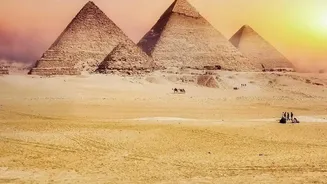
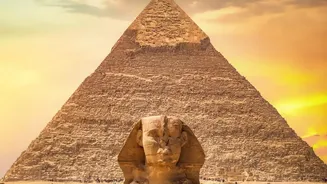
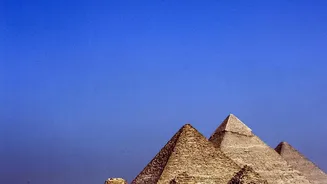
Let's be clear: no trip to Egypt is complete without standing in awe before the last surviving wonder of the ancient world at Giza or walking through the colossal columns of Karnak Temple. These sites are famous for a reason. They are monumental, breathtaking,
and steeped in a history so deep it feels almost tangible. They are the headline acts, the non-negotiable stops on a classic itinerary. However, the very fame that draws us in can also detract from the experience. The reality of visiting these bucket-list locations often involves navigating large tour groups, managing persistent vendors, and struggling to find a quiet moment for contemplation. The period between 11 a.m. and 3 p.m. can be particularly intense, as crowds and heat peak simultaneously. This doesn't diminish their grandeur, but it highlights the value of a different approach.
Beyond Giza: The Pyramids of Dahshur and Saqqara
Instead of limiting your pyramid experience to Giza, consider a day trip south to Dahshur and Saqqara. This is where the ancient Egyptians perfected their pyramid-building techniques. At Dahshur, you can witness the evolution of architecture firsthand with the uniquely shaped Bent Pyramid and the impressive Red Pyramid. Unlike Giza, these sites are often sparsely populated, allowing for a more adventurous and personal exploration. You can often enter these pyramids without the long queues found at Giza, descending into ancient burial chambers in relative solitude. Nearby Saqqara is home to the Step Pyramid of Djoser, the world's oldest stone building. Exploring these less-crowded necropolises provides a deeper historical context and a sense of discovery that is harder to find at their more famous counterpart.
Luxor's Majesty and the Serenity of Dendera and Abydos
Luxor is often called the world's greatest open-air museum, and its temples at Karnak and Luxor are staggering in scale. But the crowds can be equally staggering. For a different, more serene temple experience, take a day trip north to Dendera and Abydos. These sites are frequently skipped on standard tours due to the travel time, but the reward is immense. The Temple of Hathor at Dendera is one of the best-preserved temples in all of Egypt, with a spectacular hypostyle hall and a vibrant, painted ceiling that includes the famous Dendera Zodiac. Further on, the Temple of Seti I at Abydos is renowned for its exquisite, fine-art-quality reliefs, which look as if they were carved only yesterday. Visiting these temples offers a chance to appreciate the artistry and spirituality of ancient Egypt without the jostle of crowds.
Finding Calm in Cairo
Cairo is a city of exhilarating chaos, and while the Egyptian Museum and Khan el-Khalili bazaar are must-sees, they can also be overwhelming. To balance the intensity, seek out the city's quieter corners. Instead of only visiting the main downtown museums, explore hidden gems like the Gayer-Anderson Museum, a beautifully preserved 17th-century house, or the tranquil Al-Andalus Garden in Zamalek for a peaceful break. Coptic Cairo offers a fascinating glimpse into the city's rich Christian history, with ancient churches and a palpable sense of peace. Opting for a slow travel approach, such as a leisurely walk through a neighborhood like Al Darb al-Ahmar, allows you to observe daily life and connect with the city's living culture away from the main tourist hubs.
Beyond the Nile Valley: The Western Desert and Siwa Oasis
The classic Egyptian journey follows the Nile, but some of the country's most profound experiences lie in the vast expanse of the Western Desert. The remote Siwa Oasis, located near the Libyan border, feels like another world entirely. Famous for its unique Amazigh (Berber) culture, thousands of date palms, and shimmering salt lakes, Siwa offers a complete change of pace. Visitors can float effortlessly in the buoyant, turquoise salt pools, which are said to have healing properties. A trip to Siwa is about embracing a slower rhythm, connecting with nature, and experiencing a side of Egypt that has remained unchanged for centuries. It's a significant detour, but one that offers solitude and a deep sense of peace.