



More Than Just Abs
While many core routines focus heavily on the rectus abdominis—the “six-pack” muscles—true core strength is about much more than what you see on the surface. The side plank is a fundamental exercise that excels at building this deeper, more functional
strength. Unlike crunches, which can sometimes put pressure on the lower back, the side plank is an isometric hold that strengthens the entire trunk without spinal flexion. It specifically targets the internal and external obliques, the muscles running along the sides of your torso that are crucial for rotational movements and protecting your spine. But its benefits don't stop there; it also engages the deep spinal stabilizer muscle known as the quadratus lumborum, as well as the glutes, hips, and shoulders, making it a comprehensive full-body stability exercise.
Perfecting the Basic Side Plank
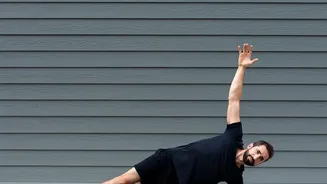
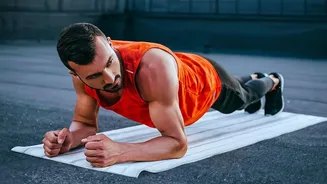
Proper form is essential to get the full benefits and avoid injury. An improperly performed side plank can strain the shoulder or lower back. Here’s how to do it correctly: Start by lying on your side on an exercise mat. Position your elbow directly beneath your shoulder, with your forearm flat on the ground and perpendicular to your body. Stack your feet one on top of the other, or stagger them for a bit more stability if you're a beginner. Before lifting, engage your core by drawing your belly button toward your spine and squeezing your glutes. Press through your forearm and the edge of your bottom foot to lift your hips off the floor. Your body should form a straight, rigid line from your head to your heels. Hold this position, breathing steadily, for your desired duration before carefully lowering your hips back down and switching to the other side.
Common Mistakes to Avoid
Several common errors can sabotage your side plank and increase the risk of injury. The most frequent mistake is letting the hips sag toward the floor, which reduces core engagement and puts stress on the lower back. Actively think about lifting your hips high. Another issue is improper shoulder alignment; if your elbow is too far from your body, it puts immense stress on the shoulder joint. Ensure your supporting elbow is stacked directly under your shoulder. Also, avoid rotating your torso forward or backward; your hips and shoulders should be stacked vertically. Finally, remember to keep your head in a neutral position, aligned with your spine, to avoid neck strain, and don't hold your breath.
Easy Modifications for Beginners
If a full side plank feels too challenging at first, there are excellent modifications to help you build strength. The most common starting point is the bent-knee side plank. Instead of keeping your legs straight, bend your knees and rest your weight on your bottom knee and forearm. This reduces the lever length, making the exercise more manageable while still effectively targeting the obliques. As you get stronger, you can progress to a full side plank, starting with shorter holds of 15-20 seconds and gradually increasing the time. The key is to maintain perfect form, even if it's for a shorter duration. A 20-second plank with good form is far more beneficial than a 60-second one with sagging hips.
Advanced Variations to Increase the Challenge
Once you've mastered the standard side plank, you can incorporate variations to further challenge your stability and strength. A popular progression is the side plank with a leg lift. While holding the plank, slowly raise your top leg toward the ceiling without letting your hips drop. This adds a significant challenge to your hip abductors and glutes. Another variation is the side plank hip dip, where you slowly lower your hips toward the floor and then raise them back up, creating a dynamic movement that intensifies the work on your obliques. For an even greater stability challenge, you can add a torso rotation (or reach-through), where you reach your top arm under your body and then back up to the ceiling.