





What Are Toe-Tapping Exercises?
The term "toe taps" can refer to several different movements, from dynamic cardio drills to targeted core exercises. However, the headline refers to the simplest and most accessible version: a gentle, seated or lying-down movement focused on the feet
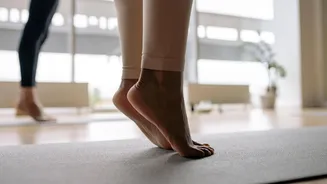
and ankles. This exercise involves rhythmically lifting and lowering your toes or tapping your feet together. It is a low-impact activity designed to stimulate muscles and blood flow in the lower legs. Unlike more strenuous versions that require platforms or involve hopping, this variation prioritises control and comfort, making it suitable for nearly everyone, regardless of fitness level.
The Subtle Power of Small Movements
Don't let the simplicity fool you; the benefits are significant. The primary advantage is improved circulation. For anyone who sits for long periods, whether at a desk or during travel, blood flow to the legs can become sluggish. Toe tapping and similar movements like ankle pumps act as a mini-pump, helping to push blood back up towards the heart. This can reduce swelling in the feet and ankles, alleviate feelings of fatigue in the legs, and even help prevent the formation of dangerous blood clots (deep vein thrombosis). Furthermore, this gentle motion maintains and improves ankle joint mobility and flexibility, keeping the supporting muscles active.
The Right Way: Small and Controlled
The key to unlocking these benefits lies in the execution. The headline's advice is crucial: focus on small, controlled movements. Whether sitting in a chair or lying down, your legs should be relaxed. You can either plant your heel and lift your toes up and down, or you can rotate your legs from the hips to gently tap your big toes together. The movement should be rhythmic and gentle, not forceful. You are not trying to achieve a full range of motion or a deep stretch. Think of it as a quiet fidget, just enough to get the muscles firing and the blood moving. Aim to perform the exercise for a few minutes at a time, several times throughout the day.
Why Pain Is a Red Flag
The most important rule of this exercise is that it should never hurt. The headline correctly frames it as a comfortable activity, not a “pain test.” If you feel sharp, stabbing, or persistent pain while performing toe taps, you should stop immediately. Pain is your body's signal that something is wrong. It could indicate an underlying issue like an injury, joint inflammation, or a nerve-related condition. Pushing through pain can exacerbate the problem. Muscle fatigue or a gentle burning sensation from use is normal, but joint pain is not. The goal is to stimulate, not strain. If a gentle movement causes pain, it’s worth consulting a healthcare professional to understand the root cause.
Who Benefits the Most?
While anyone can benefit from incorporating more movement into their day, toe-tapping exercises are particularly useful for specific groups. Office workers and anyone with a sedentary job can use this technique to counteract the negative effects of prolonged sitting. It's also an excellent exercise for frequent flyers or long-distance drivers to maintain circulation. Older adults can use toe taps to maintain joint mobility and muscle tone in the lower legs without putting stress on their bodies. Additionally, it's often recommended as part of rehabilitation after certain injuries or surgeries to gently reintroduce movement and prevent stiffness, once cleared by a doctor or physical therapist.