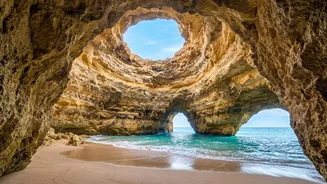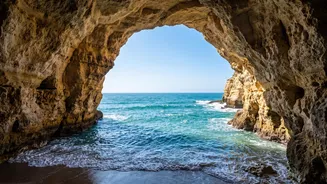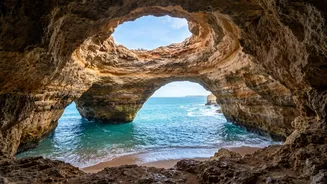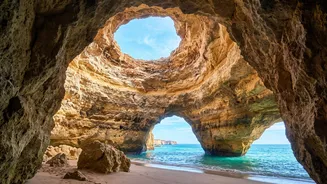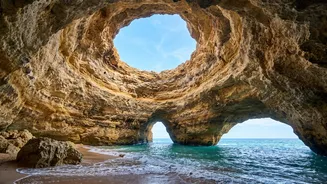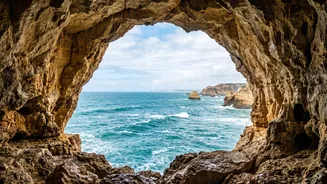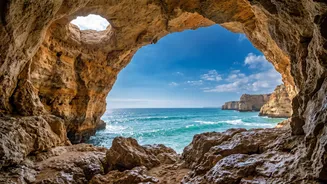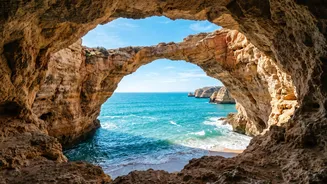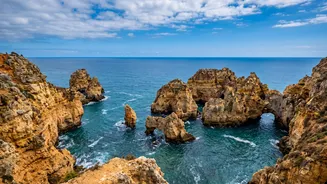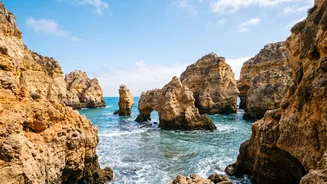




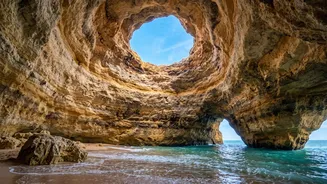
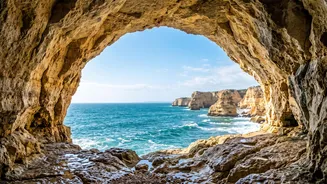
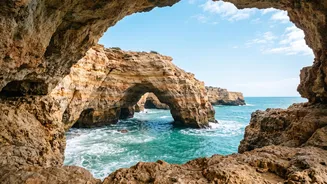
Carved by the Atlantic over millennia, the golden cliffs and turquoise grottos of Ponta da Piedade represent the Algarve’s natural artistry at its most breathtaking. This guide provides all the practical details for an unforgettable visit.
A Landscape of Golden Pillars and Arches
Ponta da Piedade,
which translates to 'Point of Mercy', is a headland just south of the town of Lagos that is famed for its dramatic limestone coastline. For centuries, this was a landmark for fishermen navigating the powerful Atlantic. Today, it’s a paradise for sightseers. The relentless ocean has sculpted the cliffs into a spectacular collection of sea pillars, natural tunnels, and hidden grottos with names inspired by their shapes, like 'the Elephant' and 'the Kissing Couple'. The contrast between the ochre and golden-coloured rock and the emerald and turquoise waters below creates a visual masterpiece that changes with the light, making it one of the most photographed spots in Portugal.
From Above: The Boardwalk and Cliff Trails
One of the best ways to appreciate the scale of Ponta da Piedade is on foot, and it is completely free to visit. A network of well-maintained wooden boardwalks allows you to walk safely along the cliff tops, offering panoramic views of the coastline stretching towards Sagres. The main trail runs for about 2.5 kilometres from near Praia Dona Ana to the lighthouse at the point, taking roughly 30-40 minutes each way. This path is largely flat and accessible, making it suitable for families and those with limited mobility. For a different perspective, a steep staircase of around 180 steps leads down from the headland to a small cove at sea level, offering a dramatic view up at the towering rock walls.
From Below: The Essential Boat Tour
To truly experience the magic of the caves and grottos, you must see them from the water. Small boat tours are the most popular way to explore, as the nimble vessels can navigate through narrow archways and enter the larger sea caves. Most tours depart from the Lagos Marina and last about 75-90 minutes. These trips often serve as a mini coastal cruise, passing by beautiful beaches like Praia do Camilo and Praia da Dona Ana en route to the main formations. Guides share insights on the geology and history of the area, pointing out the named rocks. It is also possible to take a shorter, 45-minute tour directly from the small anchorage at the bottom of the Ponta da Piedade staircase.
For the Adventurous: Kayaking and Paddleboarding
If you prefer a more active and intimate experience, exploring by kayak or stand-up paddleboard (SUP) is an excellent option. This allows you the freedom to paddle into the narrowest sea caves and passages that even the smallest motorboats cannot access. Several companies in Lagos offer guided kayak tours, which often begin with a larger boat or catamaran ride out to the headland. From there, you'll launch your kayak for a guided paddle of about 75 minutes through the stunning formations before enjoying a swim and returning. Tours typically last around two to two-and-a-half hours in total and provide all necessary equipment.
Practical Details for Your Visit
To make the most of your trip, timing is everything. The best time to visit is during the shoulder seasons of spring (March–April) and autumn (September–October) to avoid the intense summer heat and peak–season crowds. Early morning offers calmer seas and fewer people, while late afternoon provides the 'golden hour' light that makes the cliffs glow. To get there from Lagos, you can walk (30–40 minutes), take a taxi or Uber for a small fare, or use the local tourist train. While there's a car park at the lighthouse, it fills up very quickly in summer. Be sure to bring water, sunscreen, and sturdy footwear. Though boat tours can sometimes be booked on the day, it's wise to book in advance, especially during busy months.